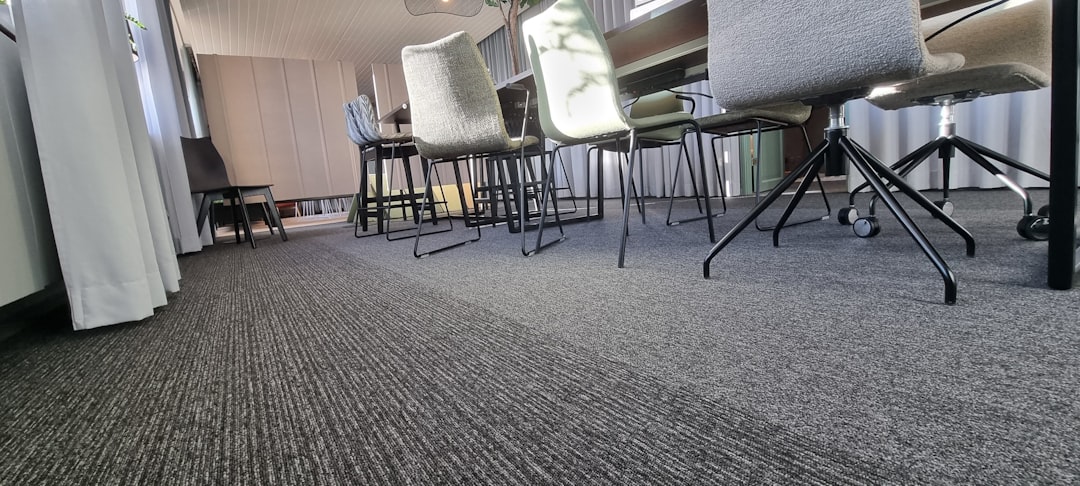
Walk across an office carpet and you are walking across years of accumulated soil. Every person who enters the building tracks in fine particles from outside, and every hour of air conditioning redistributes dust from above. The carpet catches it all.
What makes this harder to see than it sounds: a commercial carpet pile is designed to hide soil. That is a feature when you are trying to maintain appearances between cleans, but it also means a carpet can look presentable while holding a significant load of dust, skin particles, bacteria and allergens deep in the fibre.
For facilities and office managers, the gap between "looks clean" and "is clean" is the thing worth understanding.
Why this matters: The dust load in an office carpet directly affects indoor air quality, occupant health and the long-term condition of the carpet itself, so knowing what builds up, and how fast, helps you make smarter decisions about cleaning frequency.
Highlights
- A single square metre of office carpet can trap several kilograms of soil and debris over the course of a year.
- Dust mites, bacteria, mould spores and VOCs all accumulate in carpet pile, not just visible dirt.
- Vacuuming removes surface debris but leaves fine particles and allergens embedded deep in the fibre.
- Hot-water extraction removes around 96% of dust mites, soil and odour, with no chemical residue left behind.
- Big Red's in-house IICRC- and CRI-certified technicians are never sub-contracted, and we offer same-day and 24/7 service.
What actually builds up in office carpet
The short answer is: more than most people expect. A commercial carpet acts as a passive filter for everything that circulates through the space.
Soil and fine particulates
The most obvious layer is tracked-in soil: fine sand, grit and outdoor particulates that cling to shoe soles and transfer to the carpet surface with every step. In a busy office, this happens hundreds of times a day. Over weeks, the particles migrate deeper into the pile under foot traffic, where a standard vacuum cannot reach them.
Building materials add to this. Fine dust from walls, ceilings and ventilation ducts settles continuously, and a high-traffic office with older HVAC filters can accumulate particulate load surprisingly fast.
Biological material
This is the layer that tends to surprise people. Human skin sheds constantly, and in an office where dozens of people sit for hours each day, a significant proportion of that shed skin lands on the carpet or the furniture above it and falls to the floor. Skin particles are the primary food source for dust mites, which is why dust mite populations can build up even in a carpeted office that is vacuumed regularly.
Bacteria travel in with foot traffic and settle from the air. Studies on indoor environments have consistently found a wide range of bacterial species in office carpet samples, including from shoes that have crossed bathroom floors, outdoor soil and food-preparation areas.
Allergens, mould spores and VOCs
Carpet fibres trap airborne allergens, including pollen brought in from outside and pet dander carried on clothing. In Singapore's humid climate, where indoor relative humidity is frequently above 70%, mould spores find soft furnishings and carpet pile a hospitable environment. Volatile organic compounds (VOCs) from cleaning products, furniture off-gassing and adhesives also bind to carpet fibres over time.
How fast does the load accumulate?
The rate depends on foot traffic, the type of carpet and how consistently it is vacuumed. A low-pile nylon carpet in a 50-person office that is vacuumed daily will accumulate soil more slowly than a cut-pile carpet in a 200-person space that is cleaned only weekly. But even with daily vacuuming, research has found that standard upright vacuums leave behind fine particles that settle deeper into the pile over time.
One useful way to think about it: vacuuming is maintenance, not restoration. It keeps the surface manageable and removes the top layer of loose soil, which is important for extending carpet life. But it does not extract the embedded load that has migrated into the fibre structure.
For professional carpet cleaning for commercial spaces, the industry standard recommends hot-water extraction at intervals matched to traffic volume, typically quarterly for high-traffic areas and bi-annually for lighter-use zones.
The traffic-load table
|
Office type |
Typical traffic |
Recommended professional clean |
|---|---|---|
|
Small office, under 20 staff |
Low |
Every 12 months |
|
Mid-size office, 20–100 staff |
Moderate |
Every 6 months |
|
High-traffic office, 100+ staff |
High |
Every 3–4 months |
|
Lobby, reception, lift foyer |
Very high |
Every 2–3 months |
|
Clinic, food-preparation adjacent |
Mixed, hygiene-sensitive |
Every 1–3 months |
These are starting points. A space with significant outdoor exposure (ground-floor retail, a clinic with high patient turnover) may need more frequent attention regardless of staff count.
Why vacuuming alone is not enough
Vacuuming is essential, but it has a physical limit. The suction and brush action of most commercial vacuums works well on the upper pile, removing loose soil and surface debris. Fine particles smaller than 10 microns, including dust mite faeces, mould spores and fine particulates, tend to be pushed deeper or pass through the filter and back into the air.
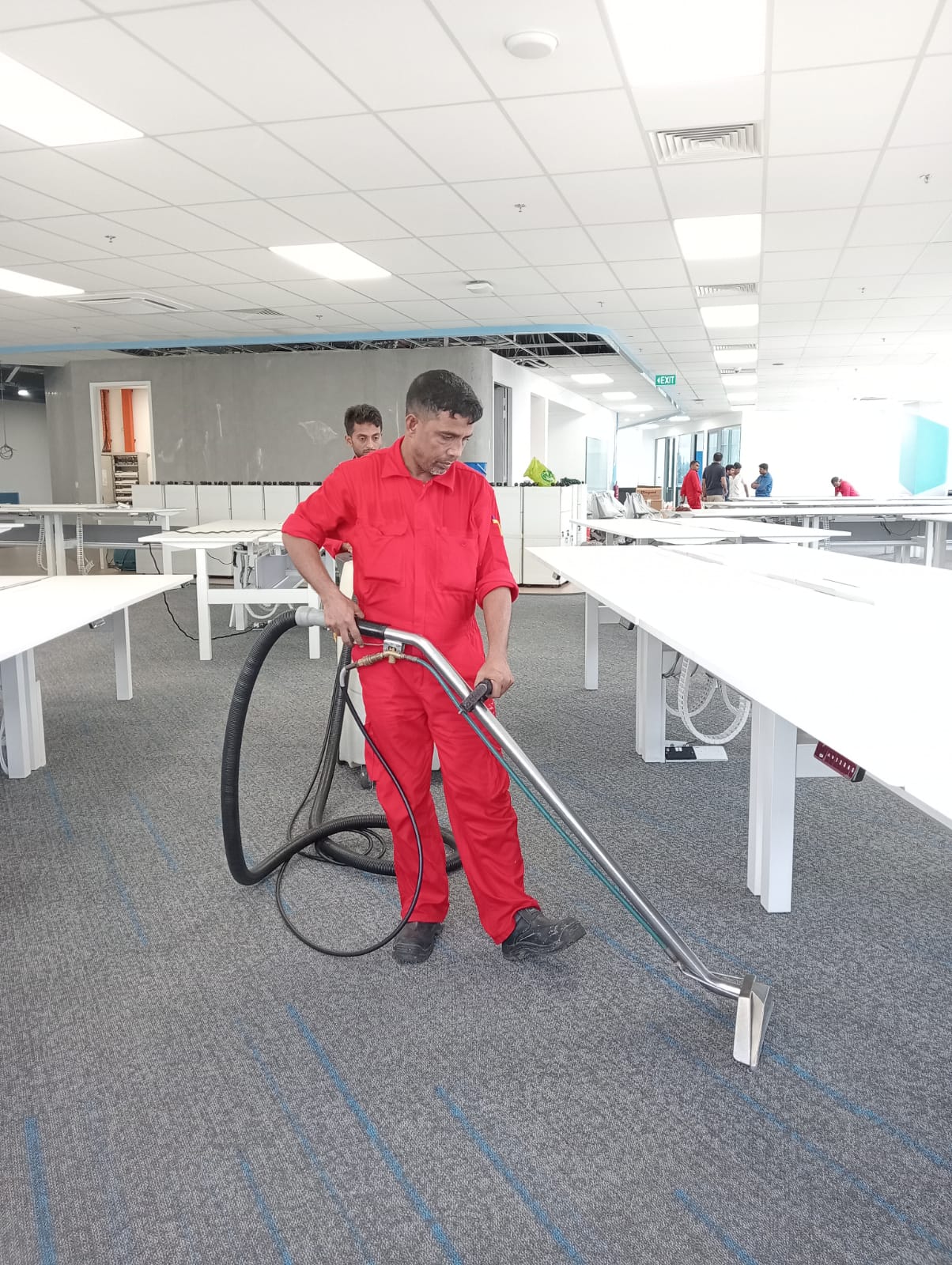
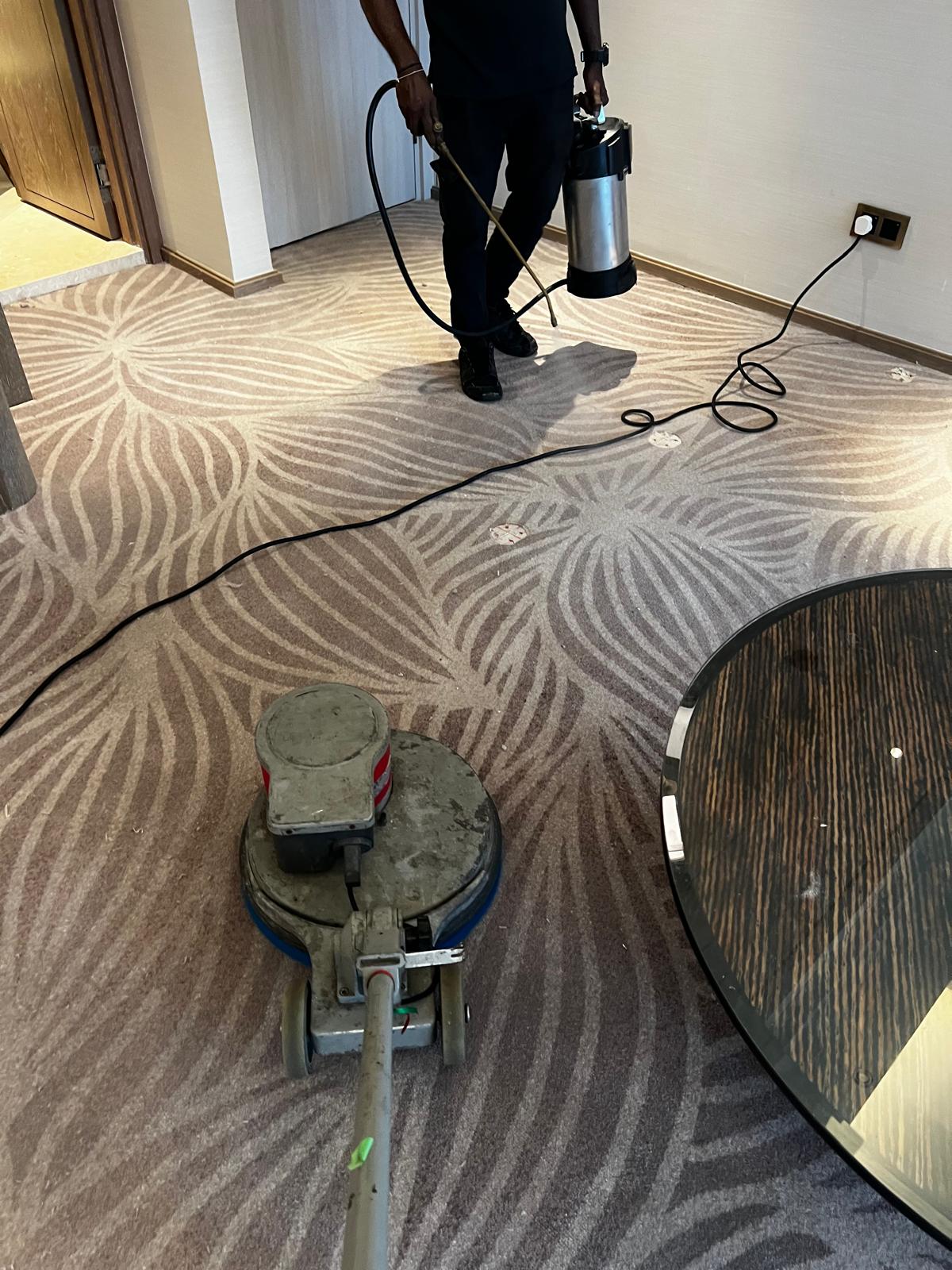
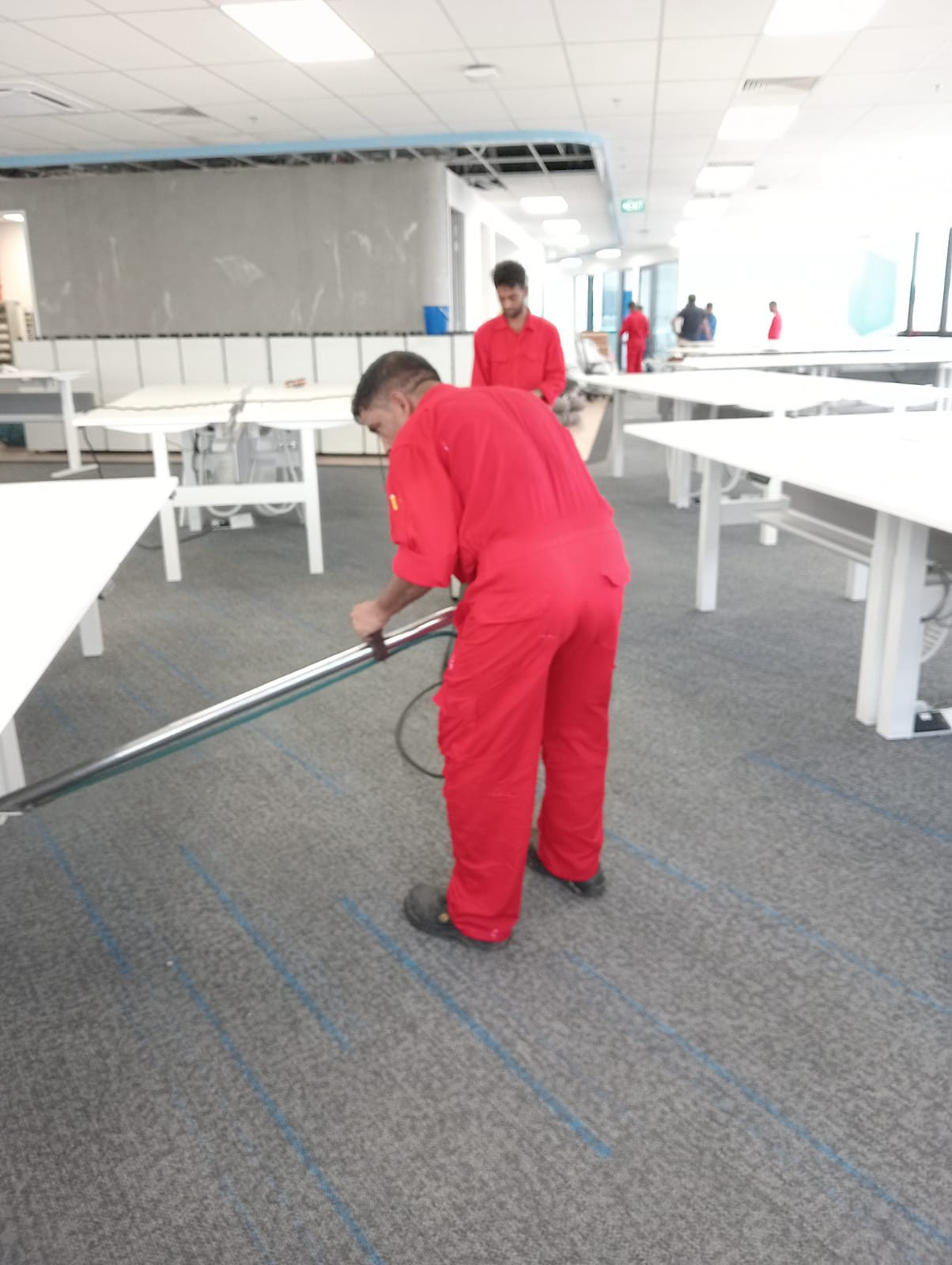
This is the main argument for periodic hot-water extraction. The combination of heat, water pressure and powerful extraction pulls material from deep in the fibre structure, something surface cleaning cannot replicate. Our carpet stain removal and deep-clean service uses this method, and the difference in what comes out of a carpet that looks clean but has not been professionally extracted in over a year can be striking.
For a broader look at how commercial carpet care fits into a facilities programme, the article on how facility managers can keep carpets clean covers scheduling and staff coordination in more detail.
When to DIY and when to call a professional
Daily or weekly vacuuming is something every office should handle in-house. It is the single most effective thing you can do between professional cleans to extend carpet life and keep the surface looking presentable. Use a HEPA-filter vacuum if possible, since standard bag vacuums recirculate fine particles.
Spot-cleaning fresh spills is also a reasonable DIY task. Blot, do not rub, and use a pH-neutral solution. The risk with DIY spot treatment is over-wetting: too much moisture in the pile without proper extraction creates the conditions for mould growth and wicking, where a stain reappears as the carpet dries. If a stain covers a large area or has been sitting for more than a few hours, professional extraction is the safer call.
For anything involving a whole-room clean, an entrenched odour or a hygiene-sensitive environment (a clinic, a childcare centre, a food-service area), professional hot-water extraction is not just better, it is the appropriate standard. Our upholstery cleaning service extends the same approach to the office chairs and soft furnishings that accumulate the same load as the carpet beneath them.
Frequently asked questions
How much soil can an office carpet actually hold before it needs professional cleaning?
There is no single threshold, because it depends on the carpet's pile density, fibre type and foot traffic. But the practical signal is this: once embedded soil is visible even after vacuuming, or you notice a persistent musty smell, the carpet has passed the point where surface cleaning will recover it. Hot-water extraction at that stage typically removes most of the embedded load, though very long-neglected carpets may not return to full original appearance.
Does office carpet really harbour bacteria and allergens, or is that overstated?
It is not overstated. Indoor environment research consistently finds a range of bacteria, allergens and fine particulates in carpet samples from commercial buildings. The concentration depends on how the space is used and how often the carpet is professionally cleaned. A regularly extracted carpet in a well-ventilated office is a very different environment from one that has not been deep-cleaned in two years.
Will professional cleaning make the office smell clean temporarily or actually remove the source?
Hot-water extraction removes the organic material that causes odour, including the dust, skin particles, bacteria and mould spores embedded in the pile. It is not a deodorant that masks the smell. After a proper extraction and drying (typically dry to the touch in 4–6 hours), the odour is gone because the source has been removed, not covered over.
Can we stay in the office during a professional carpet clean?
For smaller areas or a phased clean (one section at a time), yes, in most cases. For a full-floor extraction, it is more practical to schedule the clean outside business hours or over a weekend. We offer same-day and 24/7 service precisely to fit around operational schedules, so a Friday evening or Saturday start is straightforward to arrange.
How do we know when our office carpet really needs a deep clean?
The clearest signs are: visible matting or soiling that does not clear after vacuuming; a persistent stale or musty odour; increased complaints of sneezing or irritation from staff; and carpet that looks dull or grey even in areas that are vacuumed regularly. If it has been more than 12 months since the last professional extraction, that alone is a reasonable trigger regardless of how the carpet looks.
Ready to find out what your office carpet is really holding? Request a free quote online, call us on 6241 9443, WhatsApp 9222 9222, or email info@bigred.com.sg. We offer same-day and 24/7 scheduling to fit around your operations.