
A waiting room carpet in a GP clinic or specialist centre takes a punishment that no residential carpet can match. Dozens of patients pass through daily, many of them unwell, some immunocompromised. Shoes track in soil, bacteria and outdoor contaminants. And unlike a home, there is no convenient window to close the space for a full day while the carpet dries.
For facilities managers and infection-control leads, the question is never simply "how clean does it look?" It is: what does the cleaning leave behind, and is that safe for the next patient who walks across it or sits nearby?
Why this matters: In a healthcare environment, a carpet cleaning method that leaves chemical residue or moisture can undermine infection control, trigger reactions in vulnerable patients, and fall short of MOH environmental hygiene standards.
Highlights
- Carpets in clinics and healthcare waiting areas harbour dust mites, bacteria, and tracked-in contaminants that standard vacuuming cannot reach.
- Hot-water extraction removes roughly 96% of embedded dust mites, soil and odour, and leaves no chemical residue when done correctly.
- Big Red's eco-friendly, pH-neutral solutions are safe for patients, children and immunocompromised individuals.
- In-house IICRC- and CRI-certified technicians, never sub-contracted, means consistent quality and accountability on every visit.
- After-hours and 24/7 scheduling keeps your facility operational during cleaning.
- All cleans are backed by the 30-Day Delight money-back re-clean guarantee.
Why residue matters more in a healthcare setting
In a residential or office environment, a small amount of cleaning-product residue left in carpet pile is an inconvenience. It makes the carpet re-soil faster, and it may produce a faint smell. In a clinic, the stakes are higher.
Patients with respiratory conditions, skin sensitivities or compromised immune systems spend extended time in waiting areas. A child or elderly patient may rest a hand on the floor. Surfactant residue or solvent carry-over from an incomplete rinse cycle can off-gas VOCs or transfer to skin on contact. For a facility that must meet MOH environmental hygiene standards and satisfy infection-control audits, that is an unacceptable risk.
What the right method actually removes
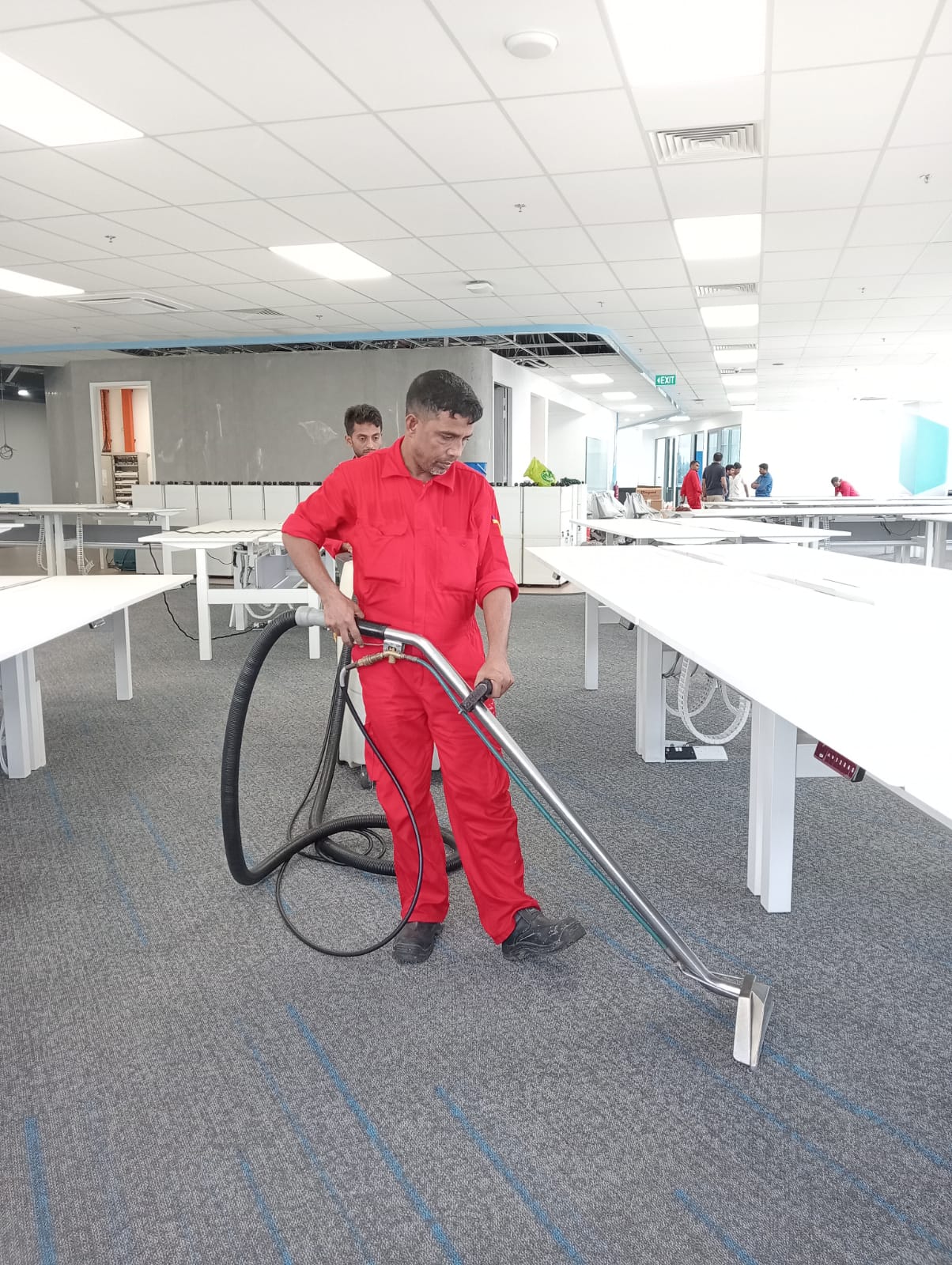
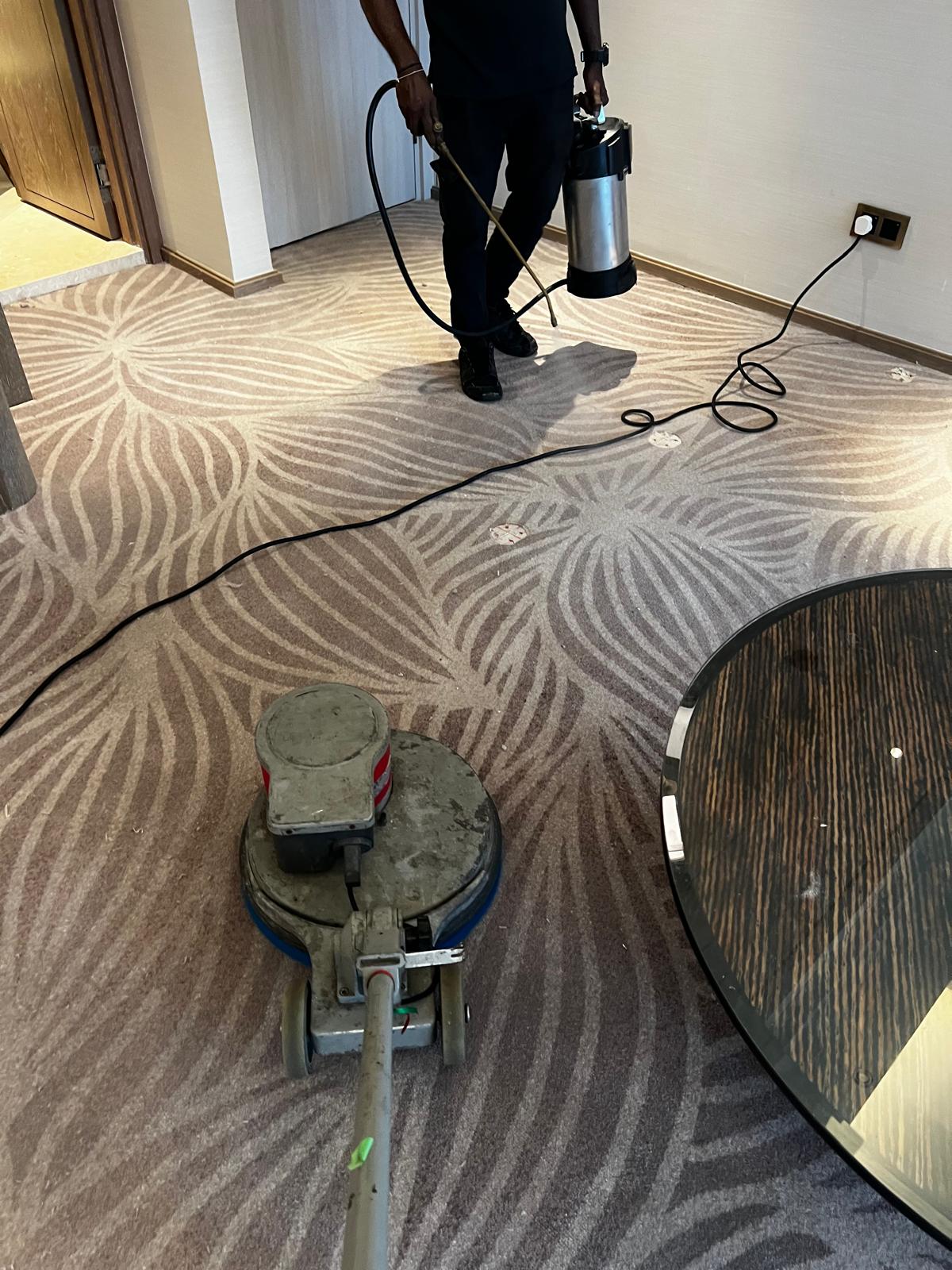
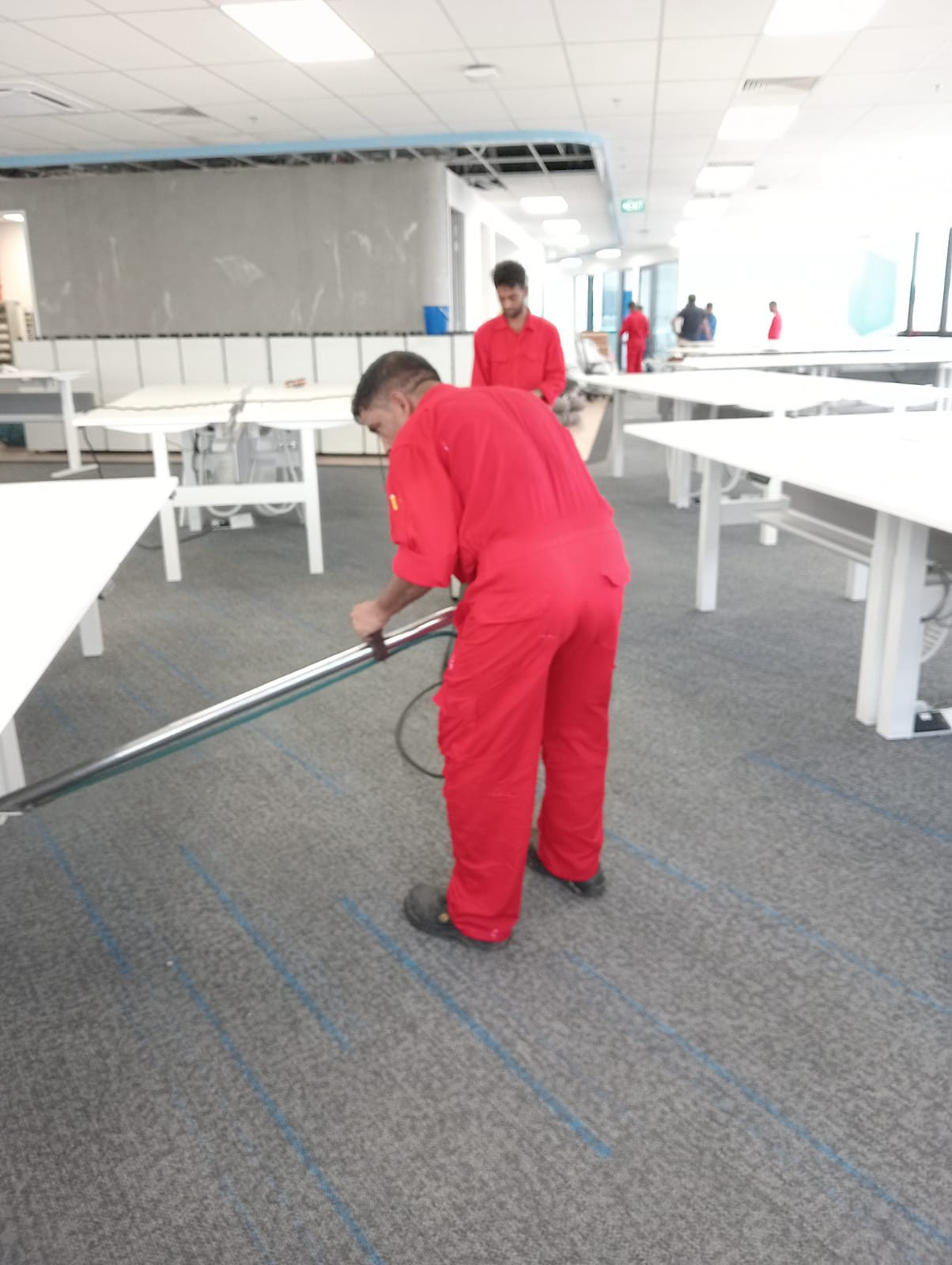
Hot-water extraction, the technical name for what most people call steam cleaning, works by injecting heated water at pressure deep into the carpet pile and immediately extracting it with a high-powered vacuum. The process lifts soil, bacteria, dust mites and allergens from the base of the fibre, not just the surface. Done by a trained technician with calibrated equipment, the carpet is left clean, damp (not wet), and free of chemical residue.
This is why professional carpet cleaning in healthcare settings should use hot-water extraction rather than dry-foam shampoo or bonnet cleaning. Both of those methods leave product in the pile. They can make a carpet look presentable, but they do not remove what is embedded, and they leave residue that healthcare environments cannot afford.
What facilities managers should look for in a provider
When you are vetting carpet cleaning companies in Singapore for a clinic or healthcare account, the checklist looks different from a standard commercial procurement. Here is what actually matters:
- IICRC certification: The Institute of Inspection, Cleaning and Restoration Certification sets the global technical standard for carpet and soft-furnishing cleaning. An IICRC-certified technician has been trained in fibre types, chemical compatibility, moisture control and extraction technique. Big Red was South East Asia's first IICRC-certified carpet cleaning company.
- CRI accreditation: The Carpet & Rug Institute's Seal of Approval programme approves cleaning solutions and equipment that meet defined performance and residue standards. A CRI-approved process gives you documented assurance that the method does not damage fibre or leave harmful residue.
- In-house technicians only: Sub-contracted labour introduces a variable you cannot control. When a company sends whoever is available through an agency, you cannot verify training, certification or background. Big Red's technicians are employed and trained in-house, so every visit to your facility is covered by the same quality standard.
- After-hours scheduling: Clinics cannot take their waiting room offline during business hours. A cleaning provider must be able to work evenings, weekends or public holidays. Big Red offers same-day and 24/7 scheduling across Singapore.
- Eco-friendly, pH-neutral solutions: The cleaning agents used matter as much as the method. We use solutions that are eco-friendly, pH-neutral and safe for children, patients and pets, no harsh solvents, no heavy fragrances that linger in an enclosed medical space.
- Proof of liability and licensing: Under NEA's Cleaning Business Licence framework, any company providing commercial carpet or upholstery cleaning in Singapore must hold a valid cleaning business licence. Ask to see it before signing a contract.
The sub-contracting problem
This deserves more attention than it usually gets. When you call one of the large platform-style cleaning services or a company that aggregates bookings and dispatches through a pool of independent contractors, you are not buying a consistent service. You are buying a different technician every time, with varying equipment, varying technique and no certainty that anyone on site holds the certification the company's website advertises.
For a healthcare facility, that inconsistency is a compliance risk. If your infection-control audit reveals a problem, you need a named, accountable contractor, not a platform that cannot tell you who cleaned your clinic last month.
Comparing carpet cleaning methods for healthcare environments
Not all methods are equal. Here is how the three most common approaches stack up for a clinic or medical waiting area:
|
Method |
Reaches embedded soil |
Chemical residue |
Drying time |
Healthcare suitability |
|---|---|---|---|---|
|
Hot-water extraction |
Yes |
None (when done correctly) |
4–6 hours |
High |
|
Bonnet / surface cleaning |
Surface only |
Yes |
1–2 hours |
Low |
|
Dry-foam shampoo |
Partial |
Yes |
2–3 hours |
Low |
|
DIY carpet machine rental |
Surface only |
Often significant |
6–12 hours |
Not suitable |
The drying time for hot-water extraction is longer than bonnet cleaning, which is why after-hours scheduling matters. A 6 pm start in a clinic waiting area means the carpet is dry and ready for the morning session. That is a practical, manageable schedule.
When carpets in healthcare facilities genuinely need replacing, not cleaning
There are limits to what any cleaning method can do. If carpet in a clinical area has sustained flood damage or sewage contamination, replacement is usually the only safe course. Similarly, carpets with delaminated backing, persistent mould growth at the base of the pile, or fibres that have broken down from years of incorrect cleaning may not respond fully to even a professional extraction clean. A good provider will tell you this honestly rather than take a job they cannot complete satisfactorily.
For routine hygiene maintenance, professional hot-water extraction every three to six months is typically appropriate for a busy clinic, with a mid-cycle dry vacuum programme in between. Our article on how facility managers can keep carpets clean goes into the scheduling logic in more detail.
For facilities managing upholstered waiting-room chairs alongside their carpets, upholstery cleaning for healthcare soft furnishings follows the same residue-free extraction approach.
Related: see why Changi Airport, Shangri-La Hotel and many Singapore clients trust Big Red with their floors.
Frequently asked questions
Can you schedule cleaning outside clinic hours so patients are not affected?
Yes. We offer same-day and 24/7 scheduling, including evenings, weekends and public holidays. Most healthcare clients book an evening slot so the waiting room is dry and ready before the next morning's first appointments. Drying time after hot-water extraction is typically four to six hours.
What cleaning solutions do you use, and are they safe for patients and immunocompromised individuals?
We use eco-friendly, pH-neutral solutions that are free of harsh solvents and heavy fragrances. They leave no chemical residue in the pile. Our solutions are safe for children, the elderly and individuals with respiratory sensitivities. We do not use solutions that off-gas VOCs or leave sticky surfactant residue.
How do I know the technician who arrives is actually certified?
All Big Red technicians are employed and trained in-house. We hold IICRC certification, the global standard for carpet and soft-furnishing cleaning, and CRI accreditation. We never sub-contract work to third-party labour pools, so the person who arrives at your facility is trained to the same standard every time.
How often should a clinic or medical waiting area carpet be professionally cleaned?
For a busy clinic with daily patient traffic, every three to six months is a reasonable baseline, combined with daily vacuuming. High-footfall areas, children's waiting zones or rooms used for procedures may need more frequent attention. We are happy to assess your specific layout and recommend a maintenance schedule that fits your infection-control requirements.
Do you carry a cleaning business licence as required by the NEA?
Yes. Under Singapore's cleaning industry regulations, any company providing commercial carpet and upholstery cleaning services must hold a valid NEA cleaning business licence. Big Red is fully licensed and has been operating in Singapore since 1986. We can provide documentation on request for procurement or compliance purposes.
A healthcare facility's carpet is not a cosmetic detail. It is a surface that contacts every patient, visitor and staff member who walks through the door, and it holds what ordinary eyes cannot see. Choosing a professional carpet cleaning provider for your clinic means choosing on method, certification and accountability, not price alone.
Ready to arrange a residue-free clean for your clinic or healthcare facility?
Contact Big Red Carpet Cleaners for a free, no-obligation quote. Call us on 6241 9443, WhatsApp 9222 9222, or email info@bigred.com.sg. You can also
Related articles
Get a free quote