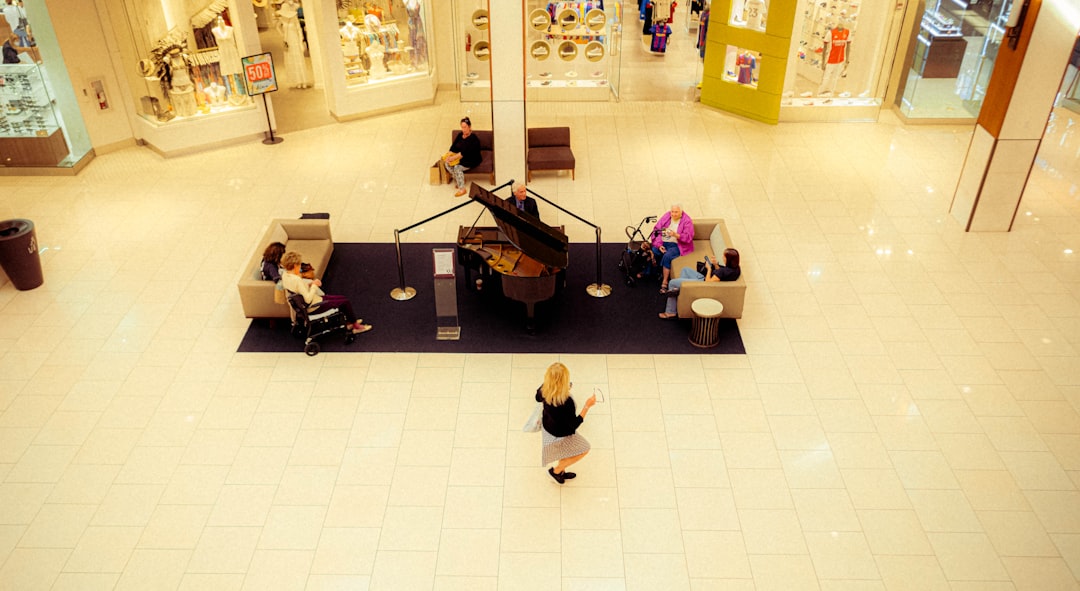
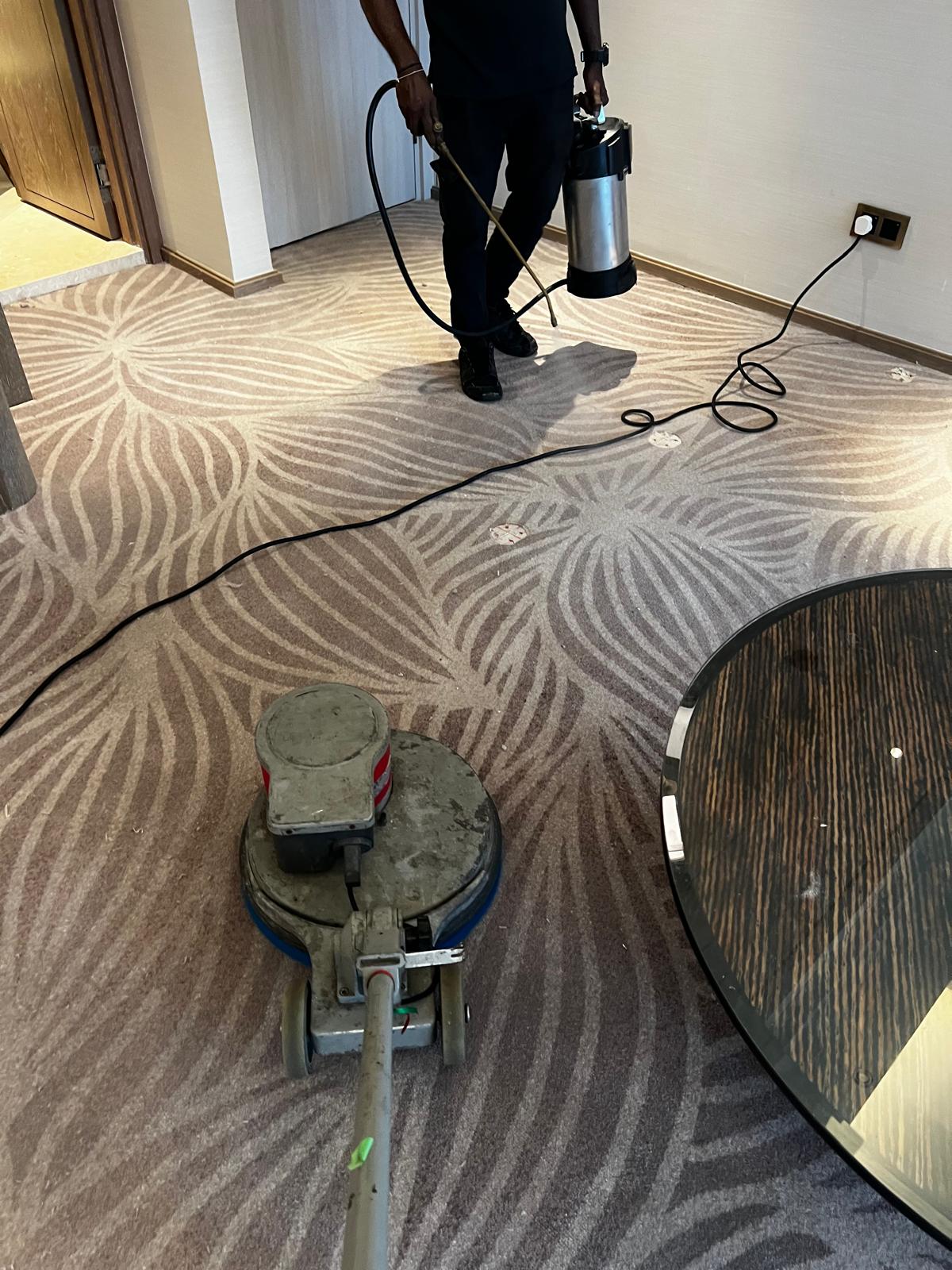
A hotel corridor carpet sees hundreds of feet a day. A ballroom gets spilled on at every event. A guest room is expected to look and smell fresh for the next check-in, regardless of what the previous occupant tracked in. The standard for carpet cleanliness in a hotel is simply higher than almost any other setting, and the cost of getting it wrong is visible to every guest who walks through the door.
Yet many hotels in Singapore still choose a carpet cleaning vendor the way they would choose a general contractor: on price and availability, with little scrutiny of the team's actual method, qualifications or operational fit. That mismatch shows up eventually in carpets that re-soil quickly, in odours that linger into guest rooms, and in disruptions to checkout-to-check-in windows that housekeeping can ill afford.
This guide lays out what to actually verify before you commit to a cleaning contract, whether you are sourcing for a boutique hotel in the CBD or a large resort property. The same criteria apply.
Why this matters: The carpet cleaning vendor you choose directly affects guest experience and review scores. A wrong call shows up in odours, rapid re-soiling, and missed handover windows that no housekeeping team can absorb.
Highlights
- Hotel carpets demand a higher cleanliness standard than residential or most commercial settings, so the vendor criteria are correspondingly stricter.
- Verify IICRC and CRI certification before anything else: these are the two globally recognised benchmarks for carpet cleaning competence.
- Confirm the company uses in-house technicians only. Sub-contracted crews vary in training, accountability and discretion in a guest-facing environment.
- Quick-dry is non-negotiable for guest rooms: hot-water extraction by a trained team should leave carpets dry to the touch in 4–6 hours.
- After-hours and 24/7 availability matters as much as method for any property with a tight turnaround schedule.
The certifications that actually mean something
IICRC: the global standard for cleaning competence
The most useful credential to ask for is IICRC certification. The Institute of Inspection, Cleaning and Restoration Certification sets the training and examination standards that separate companies with real technical knowledge from those that simply own a machine and a bottle of detergent. An IICRC-certified firm has demonstrated, to an independent body, that its technicians understand fibre types, cleaning chemistry, moisture management and restoration.
Big Red was the first IICRC-certified carpet cleaning company in South East Asia and has held that certification for over 40 years. When you ask a potential vendor for their IICRC number, you can verify it directly on the IICRC global locator. Any hesitation to provide it is itself a signal.
The Carpet and Rug Institute (CRI) certification is a second useful check. CRI tests cleaning systems against measurable performance criteria: soil removal, moisture retention and surface appearance retention. A company carrying both IICRC and CRI certification has been assessed by two independent organisations, a materially different proposition from a vendor with neither.
What certification actually tells you in practice
Certification matters for hotels specifically because hotel carpets are not homogeneous. A property might have wool-blend corridor carpet, solution-dyed nylon in the ballroom, and a cut-pile polypropylene in the fitness centre. Each fibre responds differently to cleaning chemistry, heat and agitation. A certified technician knows this before they start; an uncertified crew may not find out until a problem appears.
In-house technicians versus sub-contracted crews
This is the question that separates the best carpet cleaning companies from the rest, and it is one that most hotel procurement checklists never ask.
A company that sub-contracts its work is selling you its brand and billing you at its margin, while sending someone else's people to your property. In a residential context that is a manageable risk. In a hotel, it creates real problems:
- Discretion and security: sub-contracted workers have no formal relationship with the vendor and no consistent vetting. They are in guest corridors and, during overnight shifts, in unoccupied rooms.
- Training consistency: a sub-contractor's crew may have been trained to a different standard, or not at all, with no easy way for the vendor to verify this in the field.
- Accountability: if something goes wrong (a carpet over-wetted, a stain worsened, a piece of furniture damaged), the sub-contracting chain makes it genuinely harder to resolve.
Big Red operates with in-house technicians exclusively. Every person who arrives at a client's property is employed and trained by us, accountable to us, and familiar with our method. For a hotel GM signing a cleaning contract, that accountability is worth asking about directly: "Who exactly will be on my property, and what is your relationship to them?"
After-hours and 24/7 availability
A hotel cannot stop for carpet cleaning. Guest rooms need to turn over between checkout and the next check-in. Corridors cannot be closed during peak foot traffic. Ballrooms are often in use six nights out of seven.
The practical implication is that professional hotel carpet cleaning must happen at night, in the early morning, or in the specific windows that housekeeping identifies. A vendor who offers standard weekday hours only is simply not operationally compatible with a hotel environment, regardless of how good their method is.
Ask for same-day and after-hours availability as a minimum, and confirm 24/7 service availability for emergency situations: a significant spill before a major event, a flood from a plumbing fault, or an odour complaint that cannot wait until Monday.
Method matters: why hot-water extraction is the right call for hotel carpets
What hot-water extraction does that other methods do not
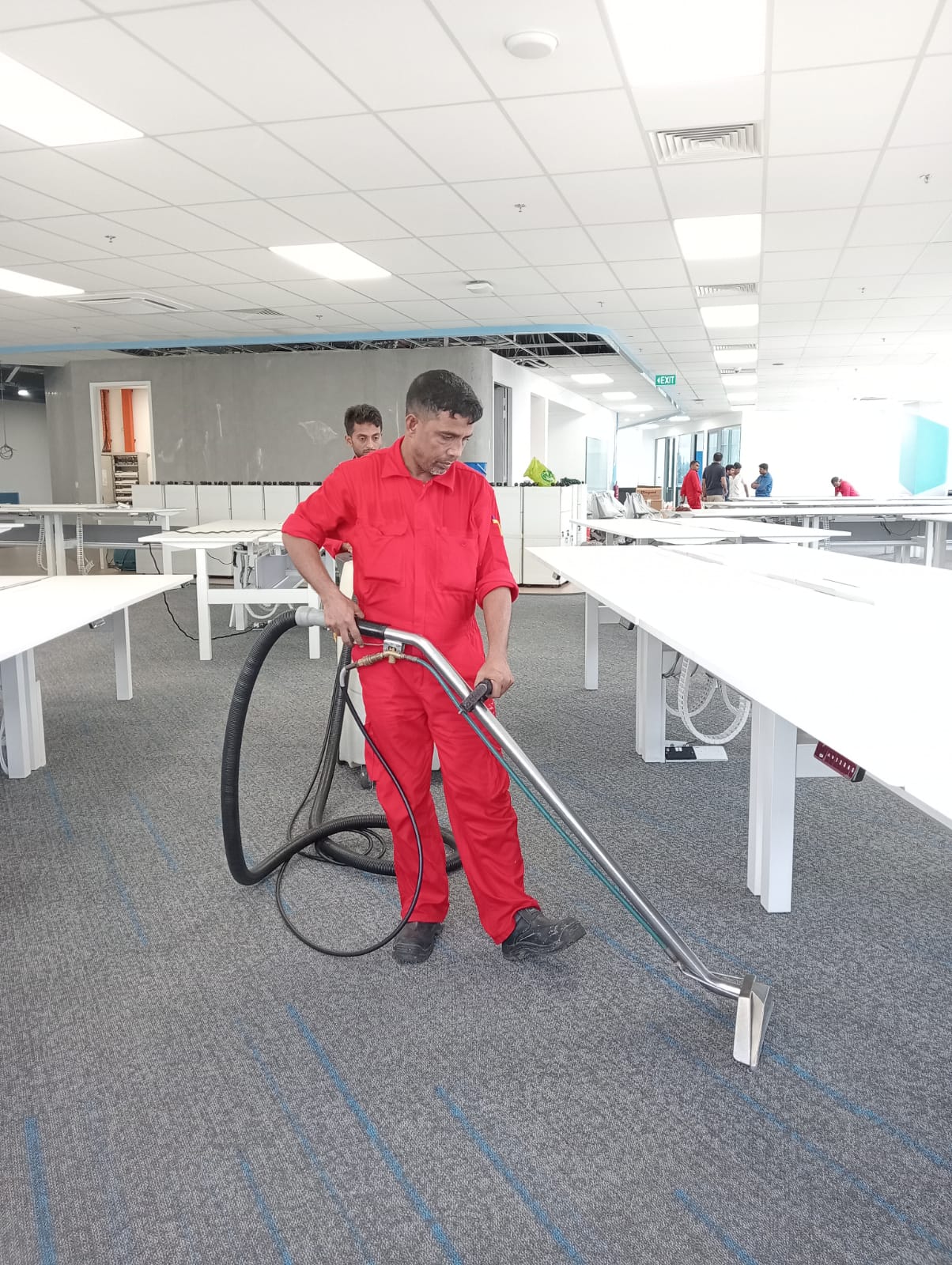
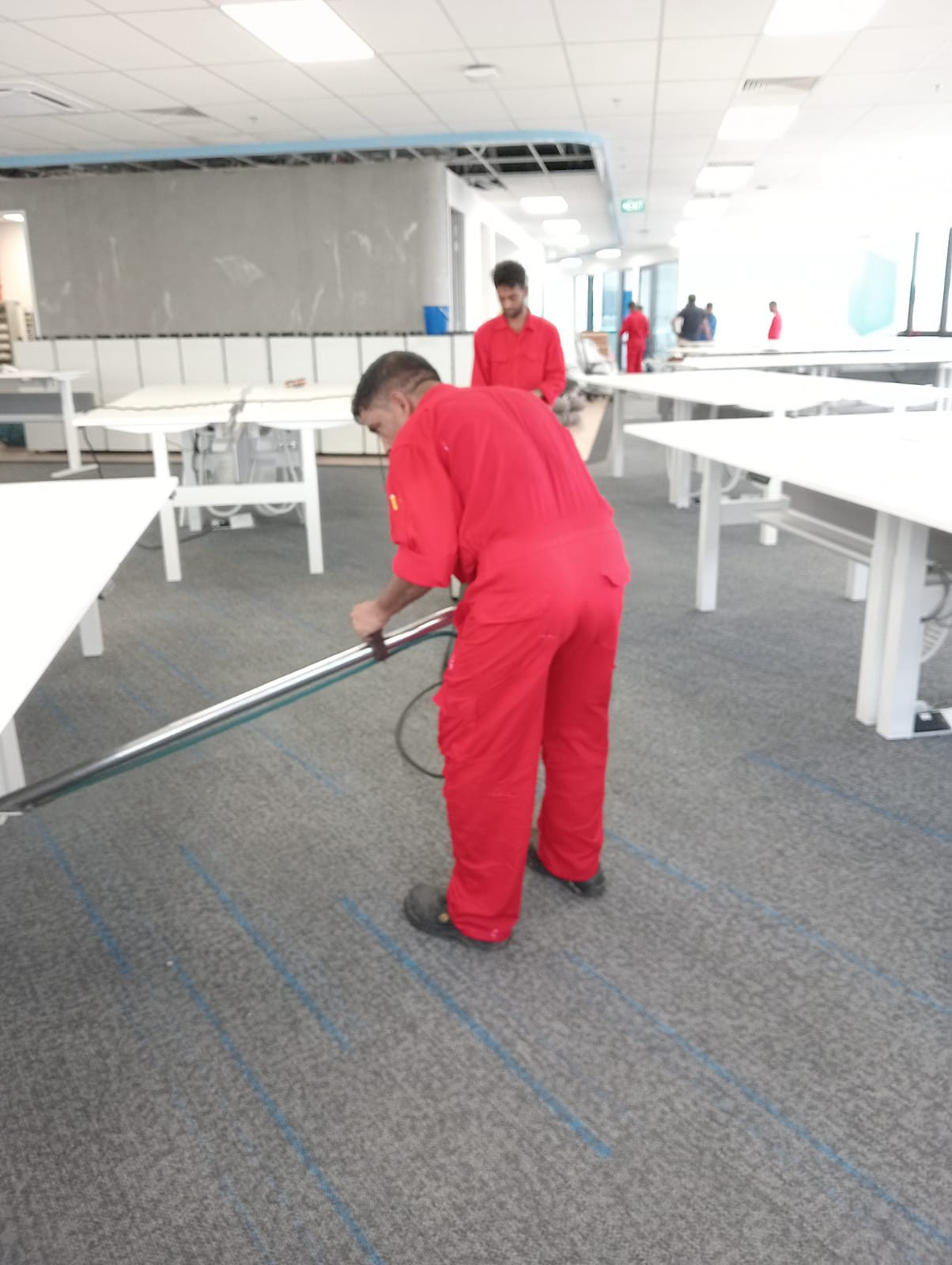
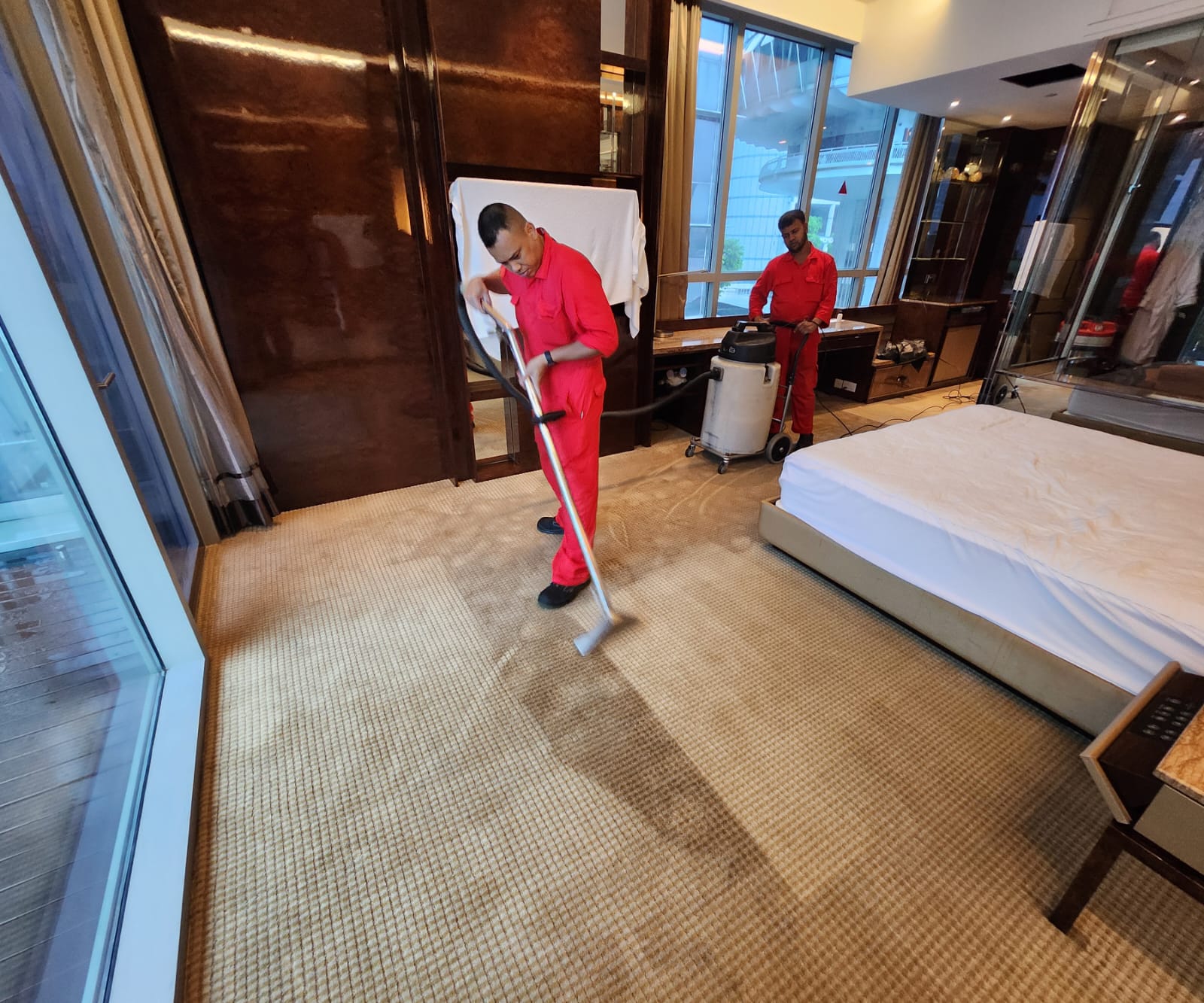
Hot-water extraction, commonly called steam cleaning, forces heated water and a cleaning solution deep into the carpet pile under pressure, then extracts it along with the loosened soil, dust mites and odour-causing residue. Performed correctly by trained technicians, it removes around 96% of embedded soil, dust mites and odour, with no chemical residue left in the fibre.
For hotels, the no-residue point is particularly important. Cleaning solutions left in carpet pile attract soil faster than the original carpet would, a phenomenon called re-soiling. A corridor that looks clean immediately after a budget clean can look dingy within two weeks, not because foot traffic is unusually heavy, but because residue from an incomplete extraction is acting as a soil magnet. Hot-water extraction by a trained team, using the right chemistry and sufficient dwell time, avoids this.
Alternative methods have their place. Dry cleaning and encapsulation work well for maintenance cleans and low-moisture situations. But for a deep clean of embedded soil, set odours or post-event recovery, hot-water extraction is the appropriate method. A good vendor will be able to tell you which method fits each situation in your property, rather than applying one approach to everything. You can read more about the trade-offs in our comparison of steam cleaning vs encapsulation for office and hotel carpets.
Quick-dry: the hotel's non-negotiable
Drying time is where many otherwise competent cleaning companies fall short in a hospitality setting. Over-wet a carpet and you face two problems: the room is out of service longer than planned, and if moisture sits too long in Singapore's humid climate, you risk browning or mould growth in the pile and backing.
A properly executed hot-water extraction clean, with calibrated water pressure and thorough extraction, should leave a hotel carpet dry to the touch within 4–6 hours. That window fits most guest-room turnaround schedules and overnight corridor work. Any vendor who cannot give you a confident, specific answer on drying time (or whose answer is "it depends, maybe 12 to 24 hours") is either using too much water, extracting too little, or both.
What to check in a prospective vendor's track record
Marquee clients and hospitality references
Any cleaning company can claim to be the best for hotels. The useful filter is who they actually clean for. Ask for hospitality references specifically, not just a general client list. A vendor experienced with hotel environments understands the operational constraints: the housekeeping handover windows, the discretion required in guest areas, the standards expected in a property that runs on guest reviews.
Big Red's clients include Changi Airport and Shangri-La Hotel, among thousands of island-wide accounts. These are not residential or small-office contracts; they are environments with the same operational pressures and guest-experience standards that a hotel GM is managing. Related: see why Singapore's most demanding properties trust Big Red with their floors.
The guarantee question
A professional cleaning company that stands behind its work should offer a clear re-clean commitment. Big Red's 30-Day Delight guarantee means that if you are not satisfied with the result within 30 days of the clean, we come back and re-clean at no charge. For a hotel procurement manager, this is a concrete accountability mechanism, not just a marketing claim. It shifts the risk onto the vendor, where it belongs.
When evaluating any vendor, ask: what happens if the carpet does not look right after the clean? A vague answer, or no answer, tells you what the follow-up experience is likely to be.
When to call a professional and when DIY covers it
Not every carpet situation in a hotel requires a full professional deep clean. Fresh, isolated spills on a guest-room carpet can often be blotted, treated with a mild solution and dried without a callout. The key rule for any spill is to blot, never rub, and work from the outside of the stain inward. Our step-by-step guide to removing coffee stains from carpet covers the basics your housekeeping team can handle in-room.
For anything involving a whole room, a corridor section, set-in odours, or a stain that housekeeping has already attempted and worsened, call a professional. DIY attempts with rental machines or consumer shampoos often leave residue that accelerates re-soiling, and over-wetting in Singapore's humidity can introduce mould within 24–48 hours if the moisture is not fully extracted. Some stains (bleach, certain dyes, old protein stains) cannot be fully reversed regardless of method; an honest vendor will tell you this upfront rather than promise results they cannot deliver.
For a hotel managing multiple carpet types across large areas, a professional carpet cleaning service on a scheduled maintenance contract is almost always more cost-effective than reactive callouts. It keeps carpets in a condition where they respond well to each clean, rather than degrading to the point where recovery is expensive or impossible.
Frequently asked questions
How often should a hotel deep-clean its carpets professionally?
For most Singapore hotels, high-traffic areas like corridors, lobbies and lifts benefit from a professional deep clean every one to three months. Guest rooms typically need a full clean every three to six months, with maintenance encapsulation cleans in between. The right schedule depends on occupancy rates, carpet type and how aggressive your in-house vacuuming programme is.
Will hot-water extraction leave carpets wet and out of service for too long?
Not with a properly trained team and calibrated equipment. Big Red's hot-water extraction leaves hotel carpets dry to the touch within 4–6 hours in most conditions. We work overnight and in agreed windows to minimise disruption, and we can confirm the drying window for your specific carpet type before any clean begins.
How do I verify that a vendor's IICRC certification is genuine?
The IICRC maintains a publicly searchable global locator at iicrc.org where you can verify any certified firm by name. If a vendor claims IICRC certification but cannot provide their firm number or does not appear in the locator, treat that as a red flag. Genuine certified firms are listed and their status is current.
Is it safe to have the carpet cleaned while the hotel is occupied?
Yes, provided the vendor uses eco-friendly, low-residue solutions and manages the work in contained sections so occupied areas are not affected. Big Red's solutions are pet- and child-safe with no harsh chemical residue, which matters in a hotel where guests and staff are present. We schedule around your occupancy and handover windows so cleaning never creates a guest-facing problem.
What should a hotel contract with a carpet cleaning company actually specify?
At minimum: the cleaning method (not just "carpet cleaning", specify hot-water extraction or encapsulation as appropriate), the certified technician requirement, the expected drying time, after-hours availability, the re-clean guarantee, and the response time for emergency callouts. A vendor unwilling to commit these to a contract is signalling that they may not be able to deliver them.
Ready to talk about your property?
Big Red has been cleaning carpets in Singapore's hotels, airports and commercial properties since 1986. Our in-house, IICRC-certified technicians work around your schedule, and every job is backed by our 30-Day Delight guarantee.
Get a free quote or contact us directly:
- Call: 6241 9443
- WhatsApp: 9222 9222
- Email: info@bigred.com.sg