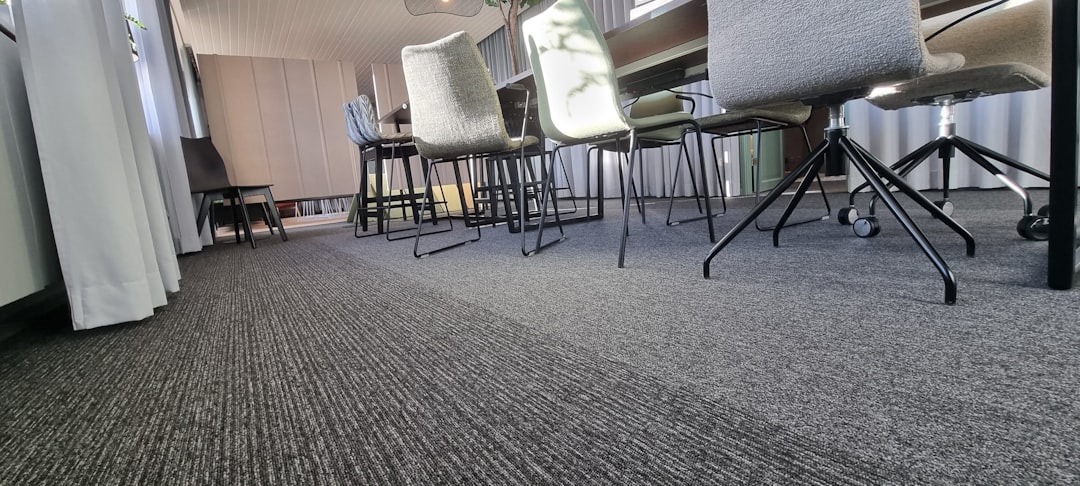

The carpet in a busy Singapore office takes a beating. Foot traffic, food and drink spills, tracked-in soil from the rain outside, it all builds up faster than most facilities managers expect. And when it is time to book a clean, the question is not just how often, but which method.
Get it wrong and you either end up with carpets that are wet for half the working day, or a surface clean that leaves the deep grime untouched. The two types of carpet cleaning that come up most for commercial spaces are hot-water extraction (commonly called steam cleaning) and encapsulation. They work differently, suit different situations, and the choice matters.
Why this matters: The wrong cleaning method for your office carpet can mean unnecessary downtime, or a clean that looks fine on the surface but leaves allergens and embedded soil behind. These are problems that compound over time.
Highlights
- Hot-water extraction and encapsulation are the two most practical types of carpet cleaning for Singapore offices.
- Hot-water extraction removes around 96% of dust mites, soil and odour, reaching deep into the pile.
- Encapsulation (dry cleaning) uses minimal moisture and dries in 30–60 minutes, ideal for occupied spaces.
- Big Red's solutions are eco-friendly and safe for staff, with no harsh chemical residue.
- In-house IICRC- and CRI-certified technicians, same-day and 24/7 service, never sub-contracted.
How the two methods actually work
Hot-water extraction (steam cleaning)
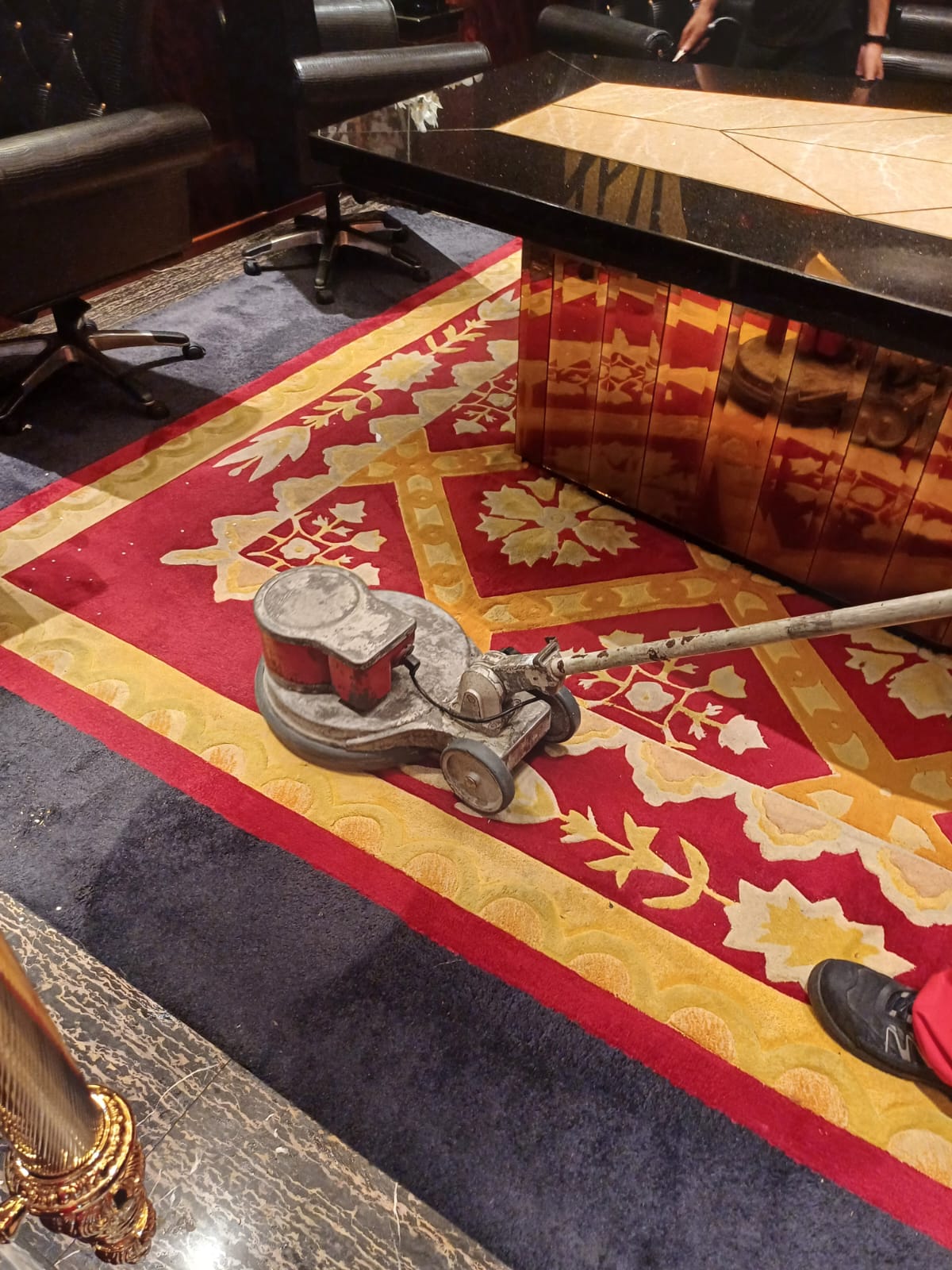
Hot-water extraction forces hot water and a cleaning solution deep into the carpet pile under pressure, then extracts it, along with dissolved soil, dust mites, allergens, and odour, using a powerful vacuum. The IICRC S100 standard defines the procedures and criteria that govern this method, and it is the one most carpet manufacturers recommend for a thorough periodic clean.
For office carpet, this is the method that actually resets the fibre. It reaches the base of the pile where compacted soil and mite colonies live, not just the visible surface layer. The trade-off is drying time: carpet cleaned by hot-water extraction is typically dry to the touch in four to six hours, which for a busy open-plan office means scheduling matters.
Encapsulation (dry cleaning)
Encapsulation uses a low-moisture cleaning compound that surrounds and crystallises soil particles as it dries. Once dry, a vacuum lifts the encapsulated crystals out of the pile. Because so little water is involved, carpets are usually walkable within 30 to 60 minutes.
This is not a deep clean in the same sense. Encapsulation is excellent at refreshing lightly to moderately soiled carpet and maintaining appearance between deep cleans. It does not remove embedded soil or dust mites the way hot-water extraction does, but for an office that cannot close a floor for half a day, it is often the practical choice for interim maintenance.
Choosing the right method for your office
The decision comes down to three things: soil load, downtime tolerance, and how recently the carpet last had a thorough deep clean.
|
Factor |
Hot-water extraction |
Encapsulation |
|---|---|---|
|
Soil depth reached |
Full pile depth |
Surface and upper pile only |
|
Dust mite removal |
~96% |
Partial |
|
Drying time |
4–6 hours |
30–60 minutes |
|
Best for |
Periodic deep clean, heavily soiled areas, post-renovation |
Maintenance clean, lightly soiled carpet, minimal downtime |
|
Frequency (typical office) |
Every 6–12 months |
Every 1–3 months between deep cleans |
|
Operational disruption |
Moderate (schedule after hours or on weekends) |
Low (can clean in occupied spaces) |
High-traffic zones versus quieter areas
Not every part of an office accumulates soil at the same rate. Lift lobbies, reception areas and corridors near the pantry are far heavier wear zones than private offices or meeting rooms used once a week. A sensible programme often layers the two methods: hot-water extraction for the high-traffic zones on a set schedule, and encapsulation for the lighter-use areas in between.
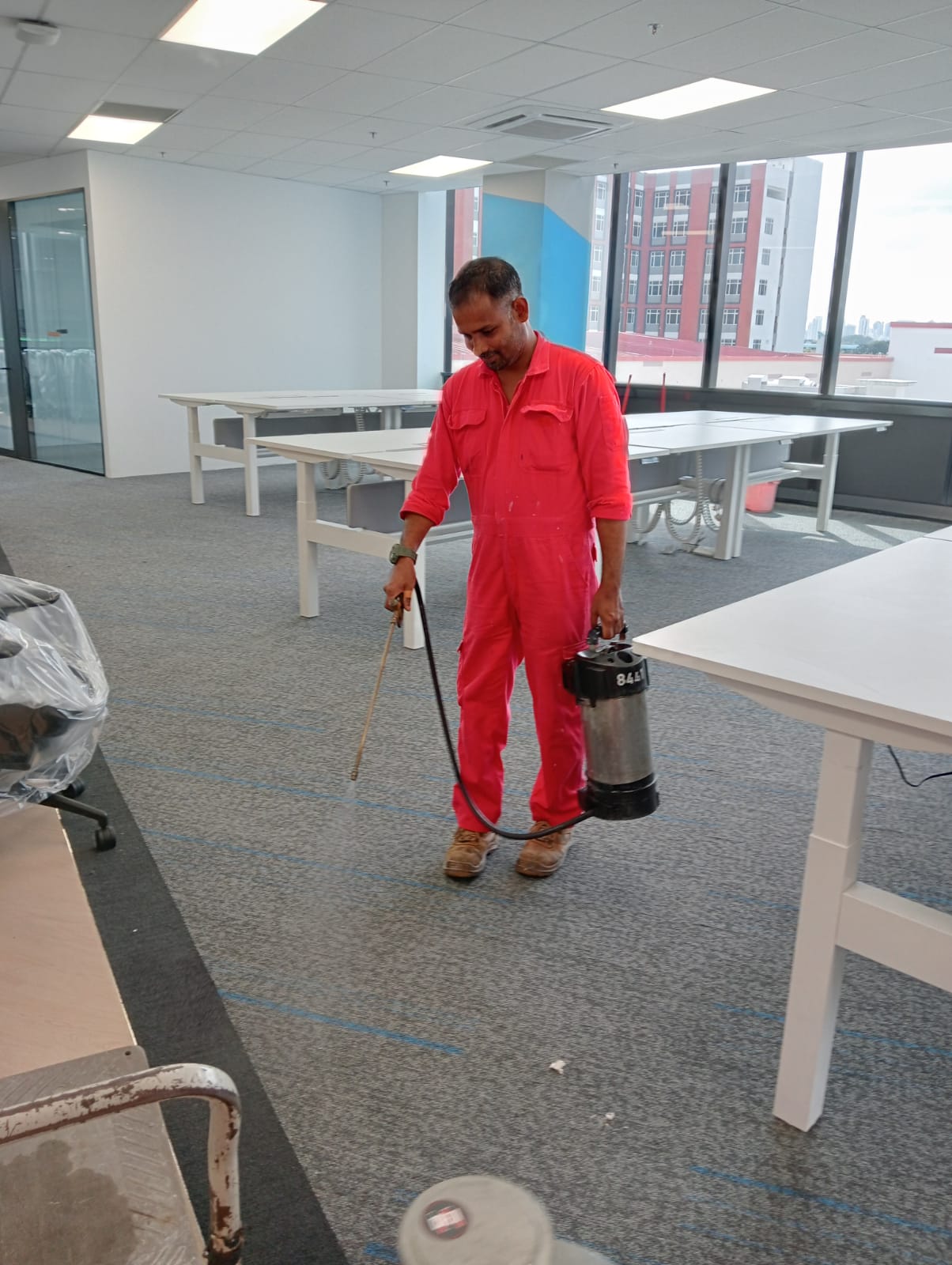
For Singapore offices, humidity is also a factor. Our climate means that carpet left damp for too long risks mould, so proper hot-water extraction, done with equipment that extracts thoroughly and not just sprays and walks away, is important. This is one reason we use professional-grade truck-mounted or portable extraction units and never leave carpet wetter than necessary.
When to choose hot-water extraction
- The carpet has not had a deep clean in six months or more.
- There are visible stains, matted pile or a persistent musty odour.
- The office is post-renovation or has had significant construction dust.
- Staff have reported increased dust-related symptoms.
- The carpet manufacturer's warranty specifies hot-water extraction.
When encapsulation makes more sense
- The carpet is on a regular maintenance programme and is not heavily soiled.
- The floor must remain in use throughout the working day.
- You need a quick refresh before a client visit or event.
- You are maintaining carpet between scheduled deep cleans.
The honest trade-offs
No single method is universally best. Facilities managers who rely on encapsulation alone, year after year, will eventually see soil build up at the base of the pile. That is the kind that vacuum cleaning and surface treatments cannot touch. That compacted layer wears fibres from the inside, shortens carpet life, and creates an environment where dust mites and allergens thrive regardless of how clean the surface looks.
Equally, insisting on hot-water extraction for every clean, on a carpet that only needs a light refresh, is overkill. It costs more, takes longer, and is unnecessary disruption if the soil load does not warrant it.
Our approach for commercial carpet cleaning is to assess the carpet properly before recommending anything. We look at fibre type, soil load, the time since the last deep clean, and what the space is used for. For a hotel lobby or a clinic waiting room, that assessment might look very different from a back-office floor with low footfall.
If you are unsure whether your carpet needs a deep extraction or a maintenance clean, it is worth reading about how much dust an office carpet holds. Our article on carpet cleaning techniques also covers the full range of methods in more detail.
For stains that have set in between cleans, our carpet stain removal service handles those separately, so a full clean is not always necessary for an isolated problem.
Scheduling around your office operations
For most Singapore offices, the practical solution is to schedule hot-water extraction after hours or on a weekend, so the carpet has the four to six hours it needs to dry before staff return. Big Red offers same-day and 24/7 service, so after-hours bookings are straightforward.
Encapsulation, because it dries in under an hour, can usually be done during off-peak hours during the day without closing the floor. For large open-plan offices, we can clean in sections, keeping most of the floor in use while each section dries.
The facilities managers at clients like Changi Airport and Shangri-La Hotel operate around exactly this kind of constraint, and scheduling flexibility is something we plan for at the outset, not as an afterthought.
Frequently asked questions
Which types of carpet cleaning work best for commercial carpet tile?
Carpet tile is well-suited to both methods. Hot-water extraction gives the deeper clean, and because tiles can be lifted and replaced individually if one is badly stained, it pairs well with targeted stain removal. Encapsulation suits routine maintenance for carpet tile because the low moisture means no risk of adhesive lifting at the edges.
How often does an office carpet need a professional deep clean?
For most Singapore offices, once or twice a year for hot-water extraction is sufficient, combined with encapsulation maintenance every one to three months for high-traffic areas. Heavier-use spaces such as reception, lift lobbies and pantry corridors may need deep cleaning quarterly. The honest answer depends on foot traffic and how well the carpet is vacuumed in between.
Will hot-water extraction leave the carpet wet overnight?
With professional-grade extraction equipment, carpet is typically dry to the touch in four to six hours. In Singapore's humidity, we recommend good ventilation and air conditioning running after a clean. If an office is booked for early-morning use, an after-hours clean the evening before gives ample drying time.
Is encapsulation safe for all carpet fibres?
For the polypropylene and nylon carpet tiles common in Singapore offices, encapsulation is safe. For natural fibres such as wool, the chemistry and moisture levels need more care. Our IICRC-certified technicians assess the fibre before choosing any method, which is the correct approach for anything other than standard synthetic commercial carpet.
Can Big Red do both methods in one visit?
Yes. For a practical maintenance programme, we can do hot-water extraction on heavily soiled or stained areas and encapsulation on the lighter-traffic sections in the same visit. That combination often gives the best result for a large office floor without doubling the drying time across the whole space.
Ready to book a clean?
Not sure which method suits your office? We are happy to advise. Contact Big Red Carpet Cleaners for a free, no-obligation quote.
- Call: 6241 9443
- WhatsApp: 9222 9222
- Email: info@bigred.com.sg
- Online: Get a free quote