
The northeast monsoon arrives in November and stays through January. The southwest monsoon follows from May to July. Between them, Singapore gets the kind of persistent, high-humidity weather that does quiet damage to anything soft on your floor, and area rugs take the brunt of it.
Moisture comes in on shoes, pet paws and bare feet. It settles into the pile. Dust mites, which thrive above 70% relative humidity, multiply fastest in the weeks after each monsoon peak. By the time a rug smells musty or looks flat, the problem has been building for months.
A seasonal rhythm, timed around Singapore's two monsoon windows, gives you a practical way to stay ahead of it.
Why this matters: Rugs cleaned and dried at the right points in the year are far less likely to develop the mould, mite infestations and permanent pile damage that shortened monsoon-season care invites.
Highlights
- Singapore's monsoon cycles create predictable spikes in moisture, mould risk and dust-mite activity inside the home.
- Vacuuming alone cannot reach the embedded soil, allergens and mites that build up in rug pile over a season.
- Hot-water extraction removes roughly 96% of dust mites, soil and odour with no chemical residue left behind.
- Big Red's solutions are eco-friendly and safe for children and pets.
- In-house IICRC- and CRI-certified technicians, quick-dry, same-day and 24/7 service available.
- Backed by the 30-Day Delight money-back re-clean guarantee.
How the monsoons affect your rugs
The northeast monsoon (November to January)
This is the wetter, windier window. Rain comes in heavy bursts, tracked moisture accumulates at entry points, and indoor humidity stays stubbornly high. Rugs near the front door, in the living room and in corridors absorb the most. Pile fibres hold moisture longer than hard floors, and the underlay beneath the rug traps it longer still.
By late January, when the rains ease, a rug that has not been professionally cleaned since mid-year will often carry a season's worth of embedded soil and a rising mite population. That is the first natural point for a deep clean.
The inter-monsoon period (February to April)
The drier weeks between the two monsoon seasons are the best window for a professional clean. Drying conditions are better, and you get the benefit of a clean, refreshed rug before the southwest monsoon arrives. If you have a wool or natural-fibre rug, this drier period is also the safest time to clean, because the risk of over-wetting and slow drying is lower.
The southwest monsoon (May to July) and the second inter-monsoon (August to October)
The southwest monsoon is generally lighter than the northeast, but humidity stays high. A rug cleaned in February holds up well through this period with regular vacuuming. The second inter-monsoon window, from August through October, is the right point for a mid-year maintenance clean if your household has pets, young children, or anyone with allergies.
A practical annual rhythm
For most Singapore homes, two professional cleans a year, timed around the monsoon windows, keeps rugs in good condition without over-cleaning them. Here is how that rhythm maps to the calendar:
|
Period |
Action |
Reason |
|---|---|---|
|
November to January |
Vacuum twice weekly; use a doormat |
Limits tracked-in moisture during peak rain |
|
Late January to February |
Professional deep clean |
Clears post-monsoon build-up before the dry window closes |
|
February to April |
Allow rug to breathe; vacuum weekly |
Best natural drying conditions of the year |
|
May to July |
Vacuum weekly; check for musty smell |
Monitor during the southwest monsoon |
|
August to October |
Second professional clean (if needed) |
Mid-year refresh, especially for households with pets or allergies |
|
October to November |
Inspect pile and backing for mould spots |
Catch problems before the northeast monsoon returns |
Households with a heavy-traffic rug, pets, or a family member with dust-mite sensitivity will benefit from the full two cleans. A guest-room rug with light use may only need one.
What to do between professional cleans
Regular home care between cleans makes the professional visits more effective and extends the time between them:
- Vacuum the rug at least once a week, twice near entry points during the monsoon months.
- Rotate the rug every three to four months to even out pile wear and sun exposure.
- Blot spills immediately with a clean, dry cloth. Do not rub, and do not saturate the area with water.
- Lift the rug and check the backing every couple of months for moisture or mould spots, especially if the rug sits on a hard floor without a breathable rug pad or underlay.
- Air the rug outdoors on a dry day once or twice a year if the size allows.
When to call a professional rather than DIY
Home care has its limits, and it is worth being direct about where they are.
Vacuuming lifts surface dust but cannot reach the mites and allergens embedded deep in the pile. Spot-cleaning a spill with a household product is fine for a fresh stain, but the wrong cleaner on a wool or silk rug can strip the dye or felt the fibre permanently. DIY rental machines, which use cold or warm water and little suction, often leave the rug too wet for Singapore's humidity levels: the backing stays damp, mould grows from the underside, and the rug never fully recovers.
The right point to call a professional is:
- After each monsoon season, as the rhythm above describes.
- When you notice a persistent musty or sour smell that vacuuming does not clear.
- After a large spill, a flood, or any event that soaked the rug or its backing.
- When the pile looks flat, dull or matted despite regular vacuuming.
- If there are visible mould spots on the backing or the pile.
For rugs with significant value, whether a Persian or Oriental rug that carries sentimental or monetary worth or a large custom piece, professional cleaning is always the safer call. Certified technicians understand fibre types, dye stability and the correct extraction pressure for each one.
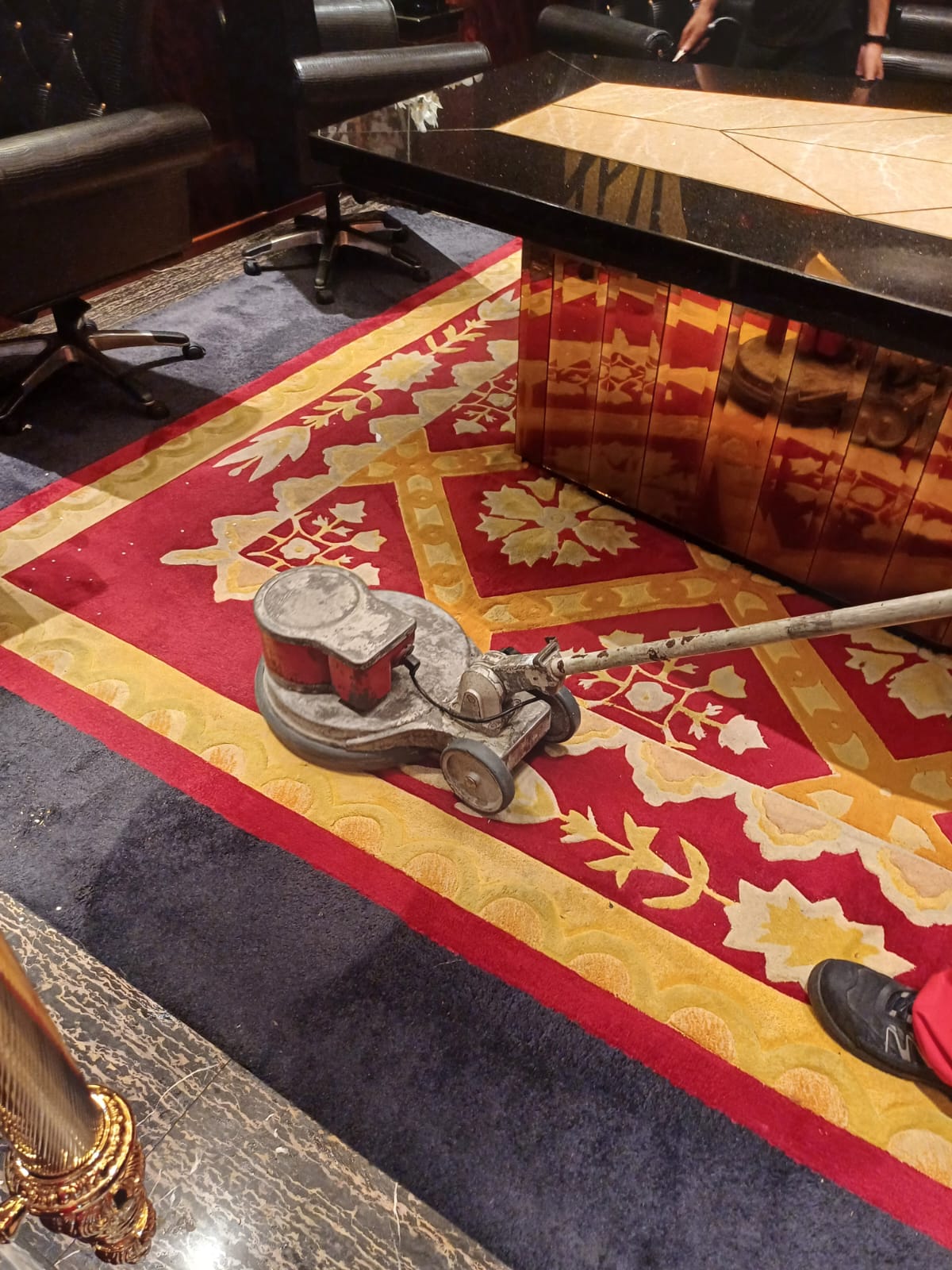
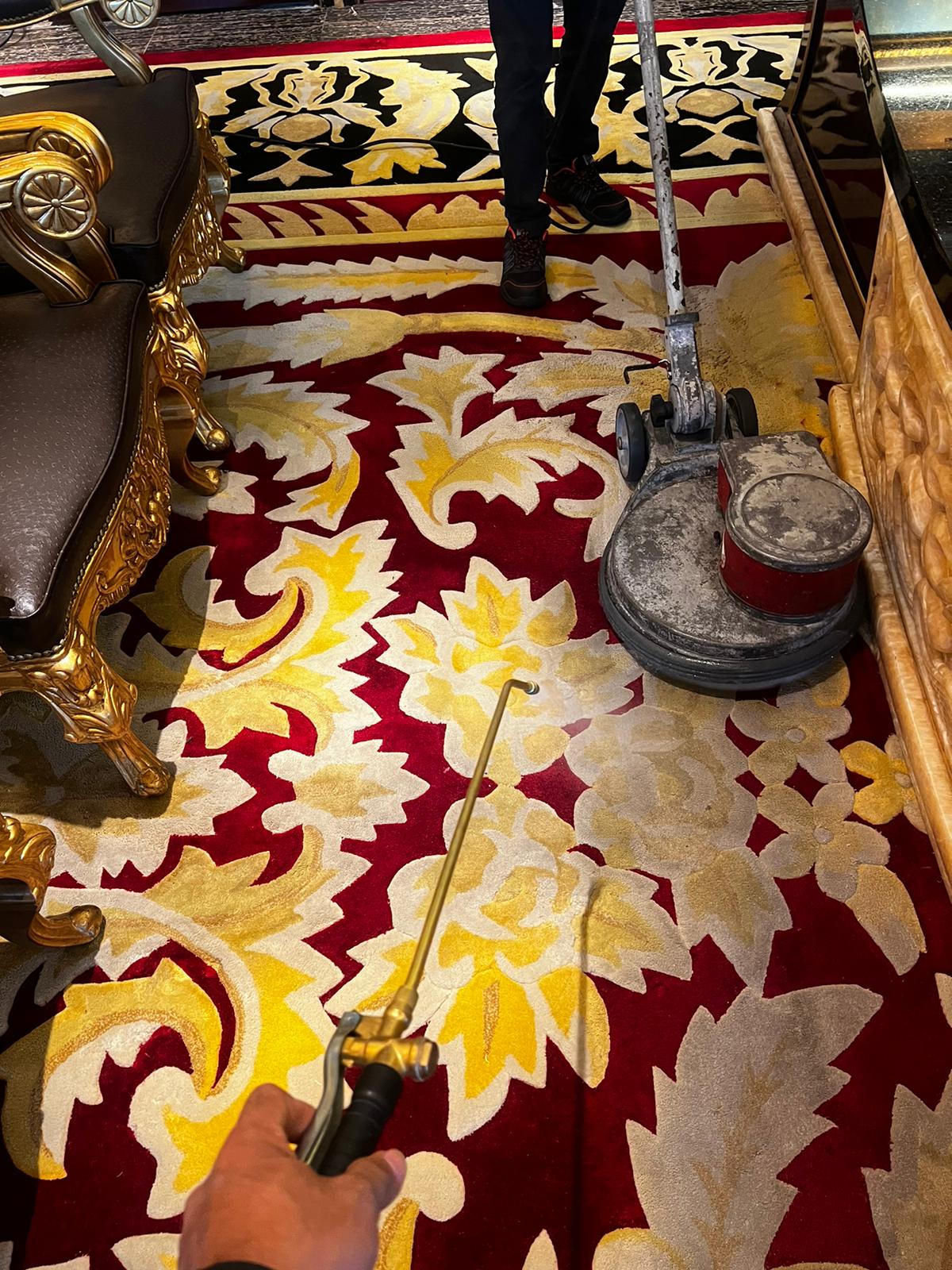
Big Red's rug cleaning service uses hot-water extraction at the right temperature and pressure for the rug's fibre and construction. The process removes roughly 96% of embedded dust mites, soil and odour, with no chemical residue, and the rug is quick-dry: typically ready to use within a few hours.
Fibre-specific notes for Singapore's climate
Not all rugs respond the same way to humidity, and the material affects how often and how carefully you should clean.
- Wool: naturally resilient and somewhat moisture-resistant, but wool felts if over-wetted or cleaned at too high a temperature. In Singapore's humidity, a wool rug needs a professional clean with controlled-temperature extraction, not a DIY machine. Check our guide on rug cleaning in Singapore's humidity for more on wool care.
- Polypropylene and synthetic fibres: more forgiving of moisture and easier to dry, but they trap soil and odour more readily than wool. Twice-yearly cleaning is still a good standard.
- Natural fibres (sisal, jute, seagrass): the most vulnerable in Singapore's climate. These fibres absorb moisture, swell, and can develop mould quickly if the backing is not dried thoroughly. Avoid wet cleaning at home; professional extraction with fast dry-down is essential.
- Silk and silk-blend: require specialist handling. Do not attempt home cleaning on a silk rug beyond blotting fresh spills.
If you are unsure of your rug's fibre content, a professional can identify it before cleaning begins.
Frequently asked questions
How often should I professionally clean an area rug in Singapore?
For most households, twice a year, timed around the northeast and southwest monsoon seasons, is a sound standard. If you have pets, young children or a household member with allergies, two cleans a year is the baseline. A lightly used guest-room rug in a home with no pets may be fine with one clean annually.
Can I clean my rug myself between professional visits?
Yes, for surface maintenance. Vacuum weekly, blot spills promptly and check the backing for moisture. What home cleaning cannot do is reach the embedded mites, allergens and soil in the pile. Over-wetting the rug with a DIY machine in Singapore's humidity also risks mould from the underside, which is difficult to reverse once it takes hold.
Will hot-water extraction shrink or damage my rug?
Not when it is done by a certified technician who matches the water temperature and extraction pressure to the rug's fibre and construction. Wool rugs, for instance, need controlled temperatures that a general-purpose rental machine cannot guarantee. Big Red's in-house technicians are IICRC- and CRI-certified and assess each rug before cleaning begins.
How long does a rug take to dry after a professional clean?
Typically a few hours to dry to the touch, depending on the rug's thickness and the ambient humidity. Our hot-water extraction method removes most of the moisture during the cleaning pass, so the rug does not need to stay out of use for a day or more. Natural-fibre rugs such as jute and sisal take longer and are handled with this in mind.
What if my rug has a musty smell after the monsoon?
A musty smell almost always means moisture has been sitting in the pile or backing for some time. Airing the rug helps temporarily, but if the smell returns, a professional clean is the right step. Hot-water extraction reaches the source of the odour rather than masking it. If there are visible mould spots, mention this when you book so the technician can assess the extent before cleaning begins.
Ready to book your seasonal rug clean?
Big Red Carpet Cleaners has been caring for Singapore rugs and carpets since 1986. Our in-house, IICRC- and CRI-certified technicians use hot-water extraction that removes roughly 96% of dust mites, soil and odour, with no chemical residue and a quick-dry finish. Every job is backed by our 30-Day Delight money-back re-clean guarantee.
Get a free quote or contact us directly:
- Call: 6241 9443
- WhatsApp: 9222 9222
- Email: info@bigred.com.sg