

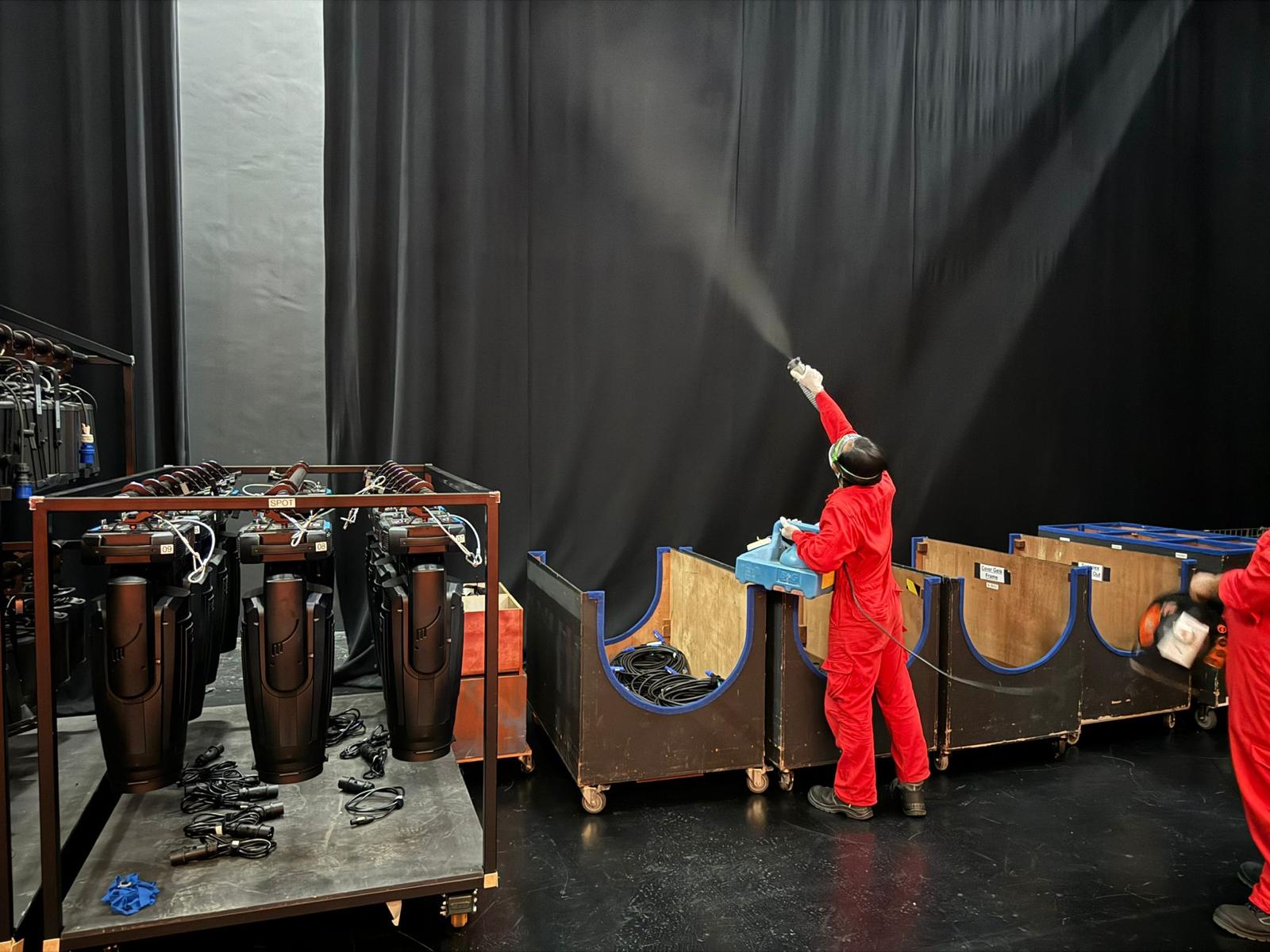
The contractors have packed up, the new tiles are gleaming, and the freshly painted walls look immaculate. But run your hand along the curtain hem and you will feel it: a fine, gritty film that no amount of airing out will shift. Renovation dust is not ordinary household dust. It contains fine silica from drilling and hacking, plaster particles, adhesive fumes and VOCs that settle into every soft surface in the flat. Curtains, with their deep folds and large surface area, catch more of it than almost anything else.
Most Singapore homeowners focus on hard surfaces after a reno: mopping the floors, wiping down cabinets, cleaning the windows. Curtains get shaken or vacuumed, and that feels like enough. It rarely is. The grit that works its way into the weave can abrade the fibres over time, and the chemical residue from paint and adhesives can cling to fabric for weeks, affecting the air quality of a freshly renovated room long after the smell has faded.
This is the gap that matters, and it is one we see consistently, whether the job is a full HDB renovation, a condo re-fit or a landed home kitchen upgrade.
Why this matters: The soft furnishings you overlook after a renovation can silently degrade your indoor air quality and your fabric's lifespan, undoing months of renovation work.
Highlights
- Renovation dust (silica, plaster, VOCs) penetrates deep into curtain folds and cannot be removed by shaking or vacuuming alone.
- Big Red uses hot-water extraction and specialist drapery cleaning methods to remove embedded particles, odour and chemical residue without damaging the fabric.
- Our solutions are eco-friendly and safe for children and pets, no harsh chemical residue left behind.
- In-house IICRC- and CRI-certified technicians handle every job; we never sub-contract.
- Same-day and 24/7 service available island-wide, with quick-dry so your curtains are back up fast.
- Backed by our 30-Day Delight money-back re-clean guarantee.
What renovation dust actually does to your curtains
It goes deeper than it looks
The visible layer of dust on a curtain surface after a reno is just the start. Fine silica particles, the kind released when contractors hack into walls or drill through concrete, are small enough to migrate deep into the weave of most curtain fabrics. Polyester sheers trap it in the filament bundles. Lined drapes hold it between the face fabric and the lining. Heavier velvet or chenille styles can accumulate a dense layer that is genuinely difficult to see.
Vacuuming lifts the top layer. It does not reach the particles that have worked their way into the pile or the folds. Shaking a curtain outdoors redistributes some of it, but the finer fraction stays put. It is the finest particles that are hardest to shift and most likely to affect air quality over time.
The VOC problem
Paint, varnish, flooring adhesive and sealants all off-gas volatile organic compounds during and after application. Curtain fabric is particularly good at absorbing these compounds because of its large surface area and its tendency to stay in place, close to walls where VOC concentrations are highest. A curtain that smells faintly of fresh paint weeks after the reno is not a coincidence: it is releasing absorbed compounds back into the room.
For HDB and condo homes where rooms are smaller and ventilation is limited, this matters more than it would in a large, airy space. Getting the curtains properly cleaned, not just aired, removes the absorbed residue at the fibre level.
When to clean: before the reno, after, or both
The case for cleaning before
If your curtains will remain in place during the renovation (as they often do in rooms adjacent to the work zone, or when only part of a home is being renovated), cleaning them beforehand gives you a baseline. Fresh, clean fabric that has not been weakened by existing soil and residue will handle the inevitable dust exposure better. It is also easier to assess any damage or discolouration after the work is done.
For curtains in rooms being directly renovated, the practical call is usually to remove them before work starts, have them professionally cleaned, and store them safely until the reno is complete.
The case for cleaning after
This is the non-negotiable step. No matter how carefully contractors seal off a room, renovation dust travels. It follows air currents, slips under doors, and settles on soft furnishings throughout the flat over days and weeks. A thorough clean after the work is done removes the accumulated silica, plaster dust, VOC residue and any paint splatter before it has a chance to set into the fibre permanently.
For anyone asking which professional curtain and drapery cleaning method is right for post-renovation fabric, the answer depends on the fabric type. Our curtain and drapery cleaning service covers a wide range of fabrics, from polyester sheers and cotton voile to heavier lined drapes and velvet, and our technicians assess each fabric before choosing the appropriate method.
|
Timing |
What it achieves |
Best for |
|---|---|---|
|
Before the reno |
Clean baseline; fabric in better condition to handle dust |
Curtains staying in adjacent rooms; delicate fabrics |
|
After the reno |
Removes accumulated dust, VOCs, paint residue |
All curtains in or near the renovation zone |
|
Both |
Full protection and restoration |
Major whole-home renovations; valuable or delicate fabrics |
What about carpets and upholstery?
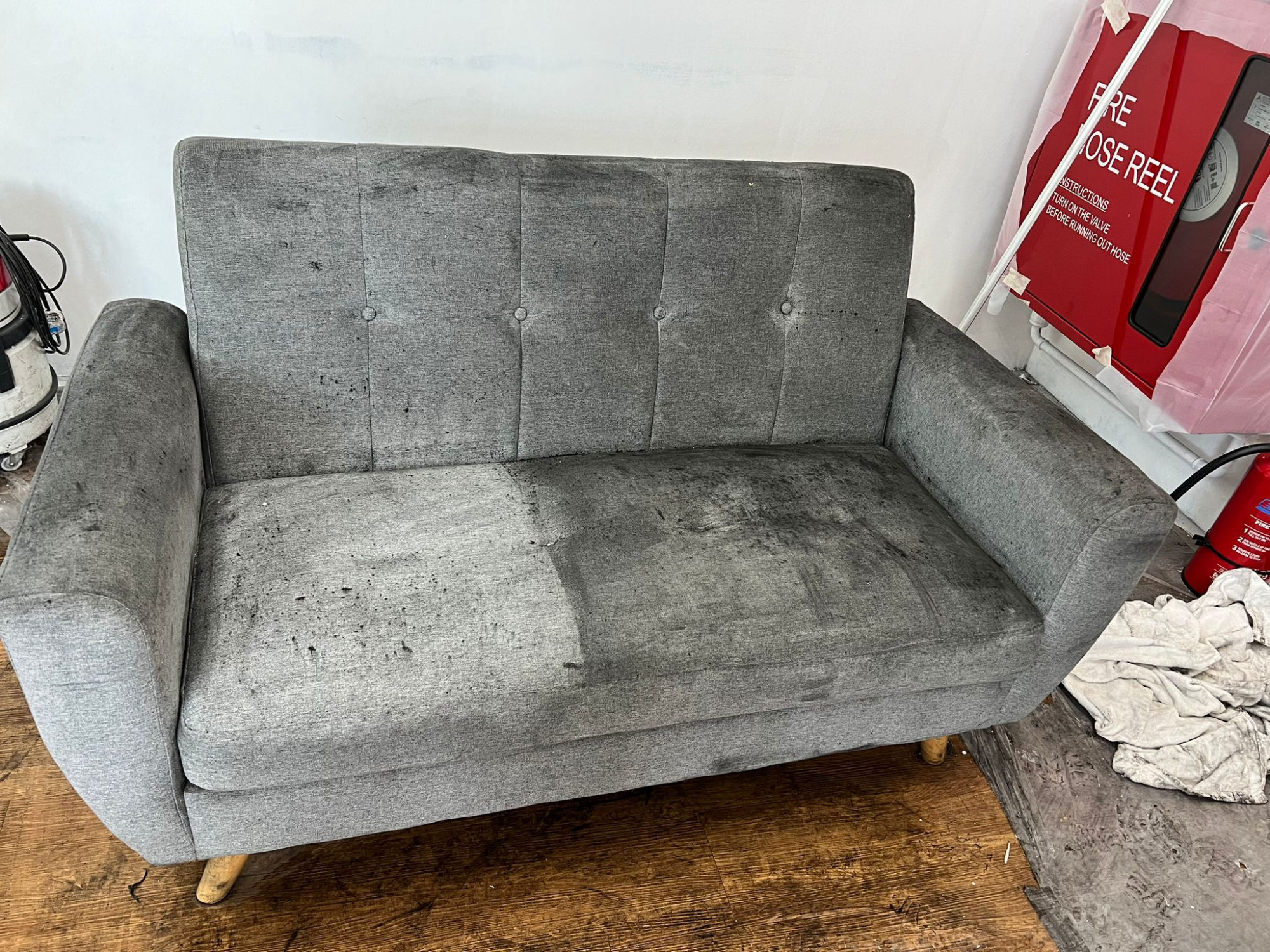
Curtains take the visible hit after a reno, but the carpet and sofa absorb just as much invisible contamination. Fine silica settles into carpet pile and stays there; upholstery fabric holds VOCs the same way curtains do. For a thorough post-renovation clean, hot-water extraction is the most effective approach: high-pressure hot water reaches deep into the pile, lifts embedded particles, and leaves no chemical residue behind. Our professional carpet cleaning service uses exactly this method, and it is the same process we have trusted for decades with clients from Changi Airport to Shangri-La Hotel.
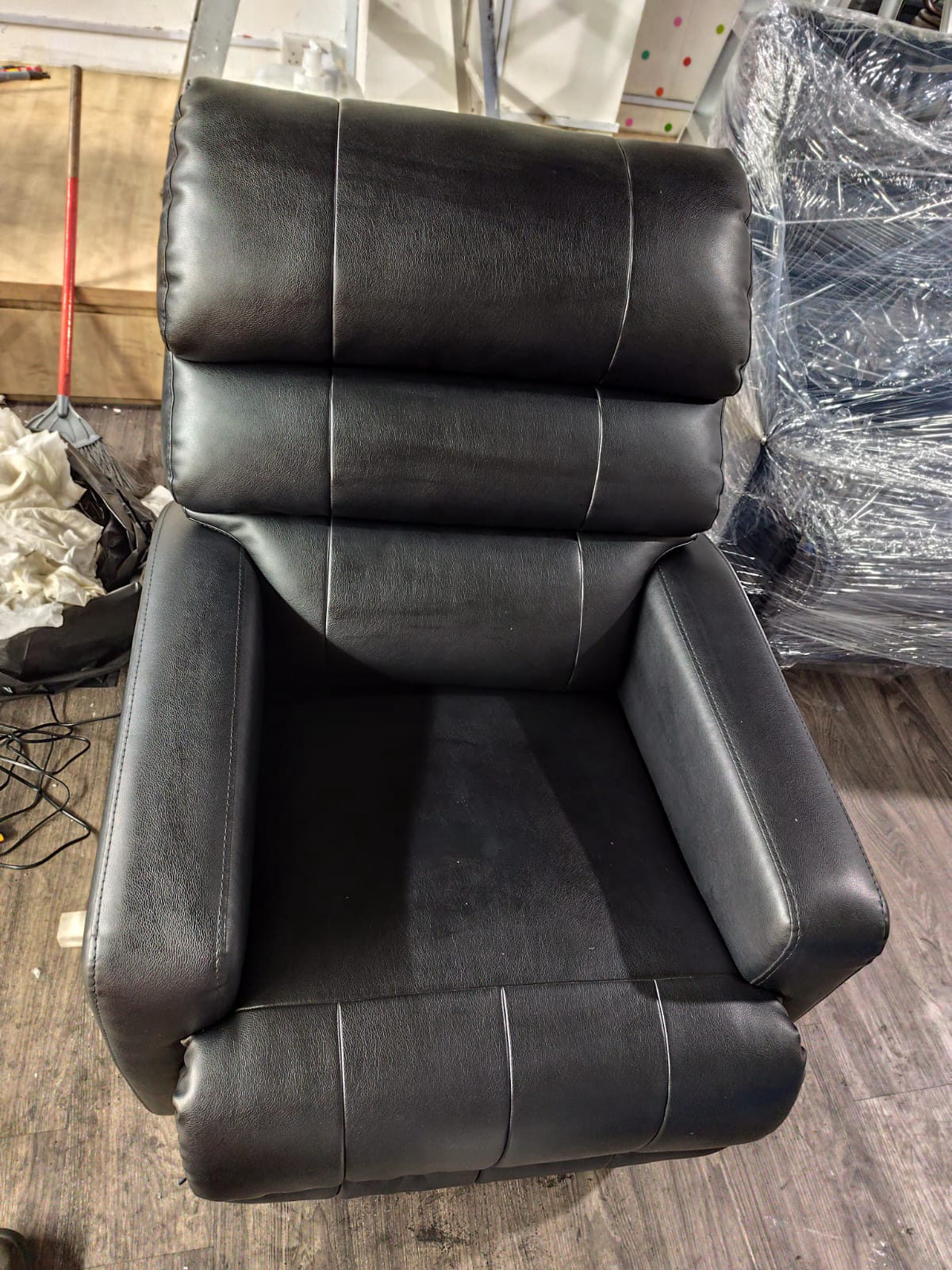
If the sofa was in or near the renovation zone, our upholstery and sofa cleaning service addresses the same problem on fabric-covered furniture.

Why the method matters as much as the timing
Hot-water extraction versus a surface clean
A surface wipe or a quick vacuum is not a clean: it is maintenance. After a renovation, when the contamination has migrated deep into the fabric, the only methods that actually work are those that reach the fibre at depth. Hot-water extraction does this by injecting hot water at pressure into the fabric and immediately extracting it along with the loosened soil, particles and residue. It removes around 96% of dust mites, soil and odour. Because the water is immediately extracted, it leaves no sticky residue that would attract fresh soil.
For curtains specifically, on-site extraction cleaning (where the curtains stay on the rail) avoids the risk of misaligned rehang and fabric stress from repeated removal. For more delicate or structured drapes, off-site cleaning at our facility gives the technician full control over temperature, agitation and drying conditions.
Why in-house technicians matter here
Post-renovation cleaning is more technically demanding than routine maintenance cleaning. The technician needs to identify the fabric type correctly (polyester and linen behave very differently under heat and moisture), assess any existing damage or discolouration from the renovation, choose the right method, and apply pre-treatment where paint splatter or adhesive residue is present. This requires trained, experienced judgement, not a sub-contracted crew working from a checklist.
All our technicians are in-house, IICRC- and CRI-certified, and trained specifically in soft-furnishing care. The person who assesses your curtains is the same person who cleans them. That continuity matters when the fabric involved is a custom-made, expensive or irreplaceable set of drapes.
For anyone still deciding whether to use a professional service or attempt a DIY clean after a reno: a DIY approach (renting a machine, using a supermarket fabric spray) is fine for light surface maintenance on robust fabrics. It is not adequate for post-renovation contamination, and it carries real risks. Over-wetting a lined curtain at home can cause the lining to shrink at a different rate from the face fabric, pulling the drape out of shape permanently. Some fabrics will watermark if wet incorrectly. The cost of replacing a set of custom drapes is considerably higher than a professional clean.
For broader reading on what to look for before booking any soft-furnishing clean, our guide on how to vet a sofa cleaning company in Singapore covers the questions worth asking any provider before they touch your fabrics.
Frequently asked questions
Can I just vacuum my curtains after a renovation instead of having them professionally cleaned?
Vacuuming removes surface dust but leaves fine silica particles, plaster residue and absorbed VOCs deep in the weave. After a renovation, these are the contaminants that affect air quality and degrade the fabric over time. A professional clean using hot-water extraction or an appropriate off-site method reaches the fibre at depth and removes what vacuuming cannot.
How long after the renovation should I wait before having the curtains cleaned?
Wait until all renovation work is completely finished, including any touch-up painting and sealant application. Cleaning while work is still ongoing means the curtains will simply re-absorb fresh dust and fumes. For most HDB and condo renos, a clean one to two weeks after the final day of work is about right: long enough for initial off-gassing to settle, soon enough to prevent the residue from bonding further into the fabric.
Will hot-water extraction shrink or damage my curtains?
In the hands of a trained technician who has assessed the fabric correctly, no. The risk of shrinkage comes from applying too much heat or moisture to a fabric that cannot tolerate it, or from incorrect drying. Our technicians identify the fabric type before choosing a method and adjust temperature and moisture levels accordingly. Delicate fabrics are handled off-site where conditions can be precisely controlled.
Should I also have the carpet and sofa cleaned after a renovation?
Yes, if they were in or adjacent to the renovation zone. Carpet pile traps fine silica and construction dust efficiently, and upholstery absorbs VOCs the same way curtains do. Hot-water extraction is the most effective approach for post-renovation contamination: it reaches deep into the pile and removes particles that vacuuming cannot shift. Combining curtain, carpet and upholstery cleaning in one visit is practical and cost-effective.
Is the cleaning solution safe for children and pets?
All the solutions we use are eco-friendly and safe for children and pets. Hot-water extraction leaves no chemical residue in the fabric. The water and loosened soil are extracted immediately, so there is nothing left behind to off-gas or transfer to skin. This is particularly important in a freshly renovated home where indoor air quality is already under pressure from paint and adhesive fumes.
A renovation transforms a space, but it also leaves an invisible layer of contamination on every soft surface in the home. Getting that layer out of your curtains, your carpets and your upholstery is the last step that most renovation checklists miss entirely.
Ready to clear the renovation residue for good? Contact Big Red Carpet Cleaners for a free quote. Call us on 6241 9443, WhatsApp 9222 9222, email info@bigred.com.sg, or
Related articles

Get a free quote