
You vacuum the reception rug twice a week. It looks presentable. But six months in, visitors are tracking a faint grey line across it, the pile is matting in the high-traffic zone, and there is a persistent mustiness the air-con can't shift. The rug doesn't look dirty. It just doesn't look right.
That gap, between surface-clean and actually clean, is where most commercial area rugs deteriorate quietly until the only fix is replacement.
For facilities managers overseeing mixed flooring contracts across reception areas, boardrooms, hotel lobbies and clinic waiting rooms, understanding that gap is the difference between a rug that lasts eight years and one that needs replacing in three.
Why this matters: In high-footfall commercial settings, an area rug that looks tired signals neglect to every client and visitor who walks across it, long before it looks visibly soiled.
Highlights
- Regular vacuuming compacts fine soil and allergens deeper into the pile; it does not remove them.
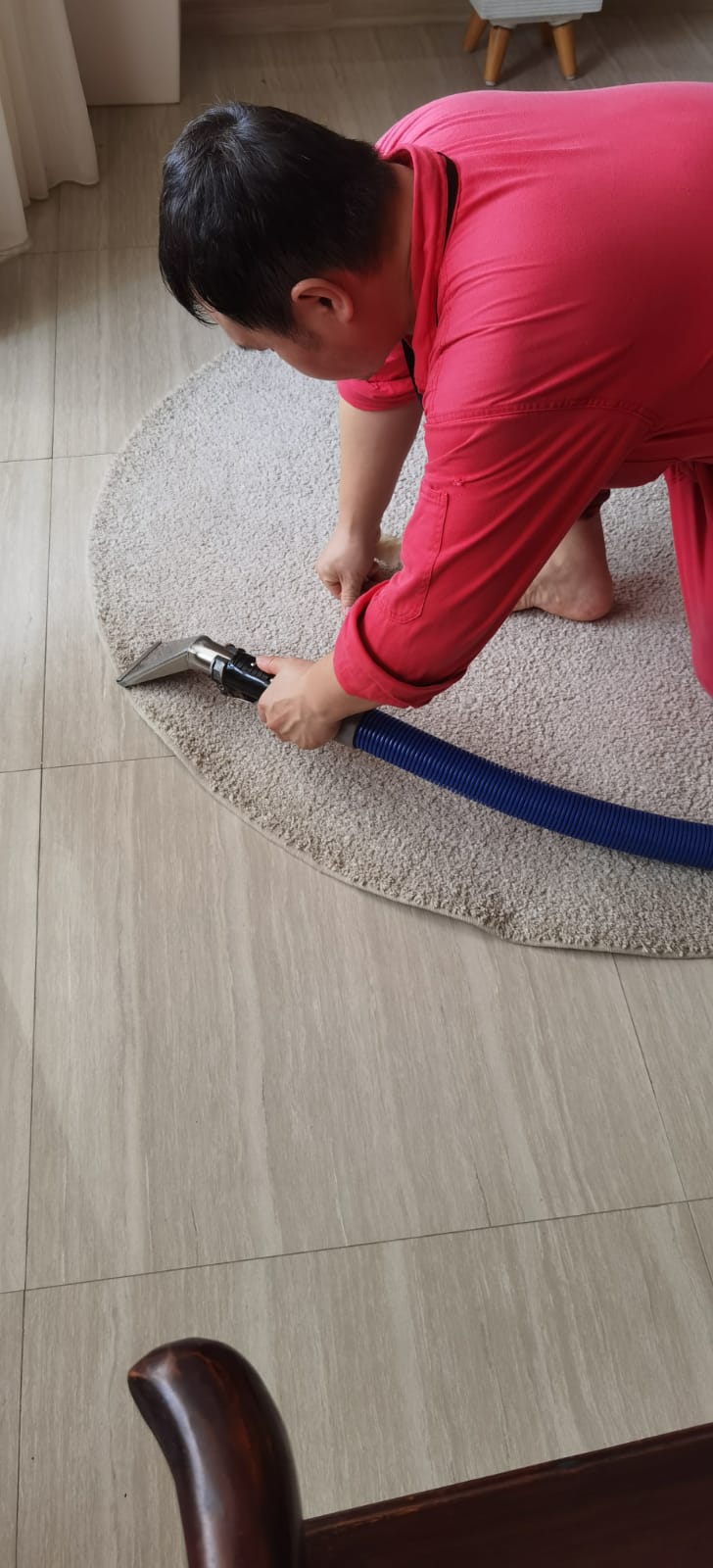
- Hot-water extraction removes roughly 96% of embedded dust, mites, soil and odour with no chemical residue.
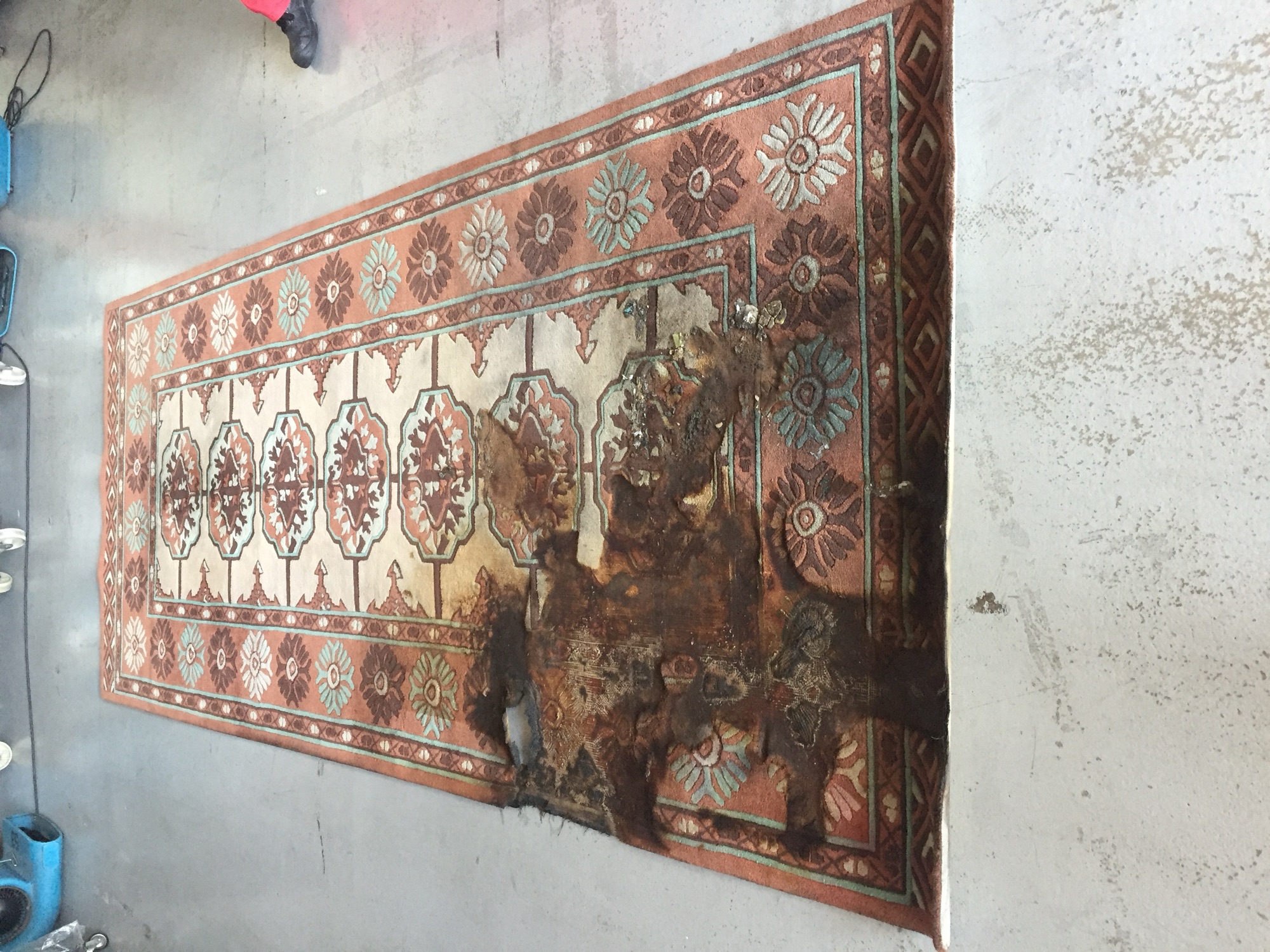
- DIY wet-cleaning of wool, silk or natural-fibre rugs in a commercial setting risks shrinkage, browning and colour bleed, damage that is often irreversible.
- Big Red's in-house IICRC- and CRI-certified technicians handle everything from nylon broadloom to antique Persian pieces, without sub-contracting.
- Same-day and 24/7 service: we work around your operational hours so rugs are back in place before the morning briefing.
- All work is backed by our 30-Day Delight money-back re-clean guarantee.
What a vacuum actually does to a commercial rug
A vacuum cleaner is an upkeep tool, not a cleaning tool. It lifts loose surface debris: crumbs, hair, dust that hasn't yet bonded to the fibre. What it cannot do is reach the base of the pile, where fine soil, skin particles and allergens settle and compact under foot traffic.
In fact, heavy vacuuming of a pile rug that already holds embedded grit can work the particles further into the fibre, acting almost like sandpaper on the individual strands. Over time, that abrasion thins the pile and dulls the colour. This is particularly damaging on wool, sisal and jute, which are common choices for commercial reception spaces precisely because they look premium.
The Carpet & Rug Institute recommends professionally deep-cleaning carpets and rugs every 12 to 18 months. In high-footfall commercial settings, the realistic interval is closer to every six to twelve months, depending on traffic and fibre type.
The humidity factor in Singapore
Singapore's humidity compounds everything. Fine soil that has compacted into the pile retains moisture from the ambient air. In a lobby or boardroom where the air-con is off overnight, that damp, soil-laden pile becomes a breeding ground for mould and the bacteria that produce musty odour. It's a pattern we see regularly in offices that have just come back from a long weekend: the carpet was fine on Friday, but by Monday morning there is a faint smell that visitors notice before staff do.
For more on how mould takes hold in soft furnishings, our guide on mould in Singapore homes and offices covers the conditions that accelerate it and what actually stops it.
The risks of DIY wet-cleaning a commercial rug
The temptation to save the call-out and run a hired machine over a soiled rug is understandable. For a basic nylon or polypropylene broadloom tile, it's low-risk. For anything more valuable or delicate, it is genuinely dangerous.
Shrinkage and browning
Wool and natural-fibre rugs, the ones that look most impressive in a lobby or boardroom, are also the most sensitive to incorrect cleaning. Over-wetting a wool rug causes the fibre to swell and the backing to shrink unevenly. The result is a rug that buckles, warps and will never lie flat again.
Browning is a related problem. It happens when moisture draws up dissolved soil and cellulosic matter from deep within the pile as the rug dries. It manifests as yellow-brown tide marks across the face of the rug, often only visible after the surface appears dry. In our experience, these marks tend to appear two to three days after a DIY clean, when the facilities manager has already assumed the job is done.
Colour bleed on Persian and Oriental pieces
Hand-knotted Persian and Oriental rugs use dyes that can bleed when wet, especially if the cleaning agent is not pH-matched to the fibre and dye type. A colour bleed (red running into cream, for instance) is irreversible. On a piece that cost several thousand dollars, that is a significant loss, and it voids most manufacturer and retailer warranties.
Our rug repair and restoration service can address some forms of dye migration and pile damage, but prevention is far less costly than restoration.
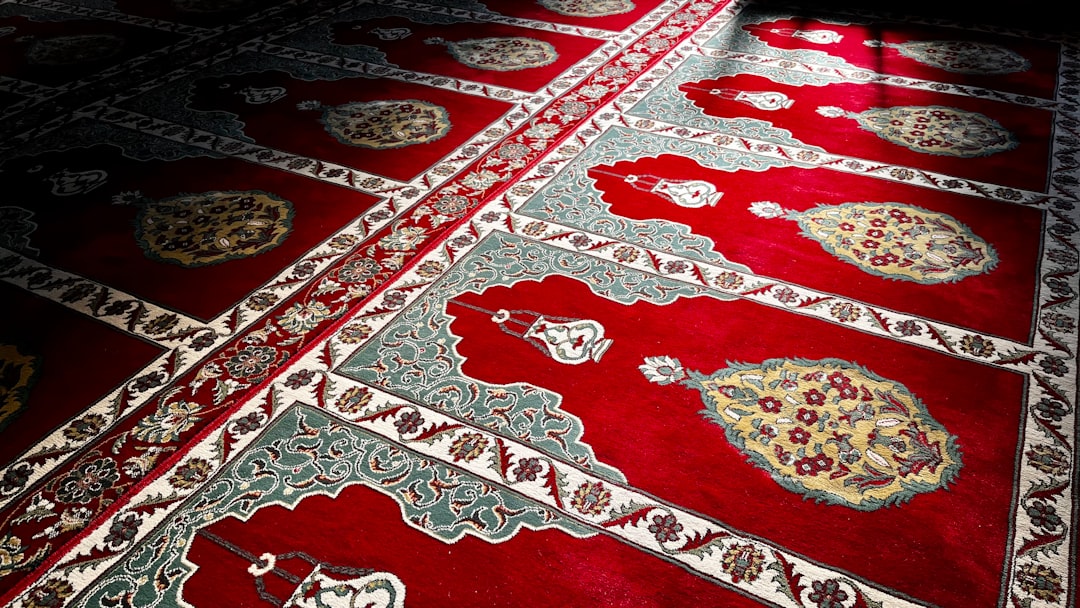
Over-wetting and mould risk
A hired extraction machine can deliver several times the moisture that is safe for a specific rug construction. If the rug is laid on a non-breathable floor (polished marble, for instance) and the building's air-con comes on overnight, the rug may dry on top while remaining wet underneath for days. That underside moisture is where mould colonises.
For FM managers responsible for a clinic or a hospitality venue, mould in a reception rug is not just a cleaning issue. It is a health and liability issue.
Hot-water extraction vs off-site rug washing: choosing the right method
Professional area rug cleaning is not a single method. The right approach depends on the fibre, the construction, the soiling level and the operational constraints of the space.
|
Situation |
Right method |
Why |
|---|---|---|
|
Nylon or polypropylene rug, moderate soil |
Hot-water extraction, in situ |
Fast, effective, minimal disruption |
|
Wool or blended pile rug, moderate soil |
Hot-water extraction with pH-balanced wool solution, in situ |
Lifts soil safely; managed moisture control |
|
Heavy soiling, pet contamination, or persistent odour |
Off-site wash and dry |
Full immersion clean, controlled drying room, pile grooming |
|
Hand-knotted Persian or Oriental rug |
Off-site, specialist wash |
Dye-safe testing first; hand-wash by method; no machine agitation |
|
Antique or silk rug |
Off-site, specialist wash |
Minimum mechanical intervention; specialist drying to prevent pile crush |
For most commercial spaces, hot-water extraction done on-site is the right answer: minimal disruption, no transit risk, quick-dry so the space is operational within hours. Off-site is the call for high-value, heavily soiled or structurally delicate pieces where the risk of in-situ cleaning outweighs the convenience.
Our rug cleaning service covers both, and our technicians will tell you honestly which method is appropriate before any work begins, including when a piece is better left to a specialist restorer.
Managing a mixed flooring contract
FM managers overseeing multiple assets, a combination of wall-to-wall carpet, area rugs, hard flooring and upholstery, often find the rug component is the most neglected because it falls between categories. The carpet contractor says it is not a carpet. The general cleaner says it is not their scope.
Big Red handles the full range: professional carpet cleaning for broadloom, area rug cleaning for loose-laid and statement pieces, upholstery cleaning for soft furnishings in boardrooms and waiting areas, and marble and parquet maintenance for hard floor zones. One team, one point of contact, no gaps in scope.
Related: see the commercial clients who trust Big Red with their facilities, including high-footfall venues where appearance standards are non-negotiable.
Frequently asked questions
How often should commercial area rugs be professionally cleaned?
For most high-footfall commercial spaces, reception areas, hotel lobbies, boardrooms, a professional clean every six to twelve months is the practical baseline. The Carpet & Rug Institute recommends deep-cleaning every 12 to 18 months for typical use; commercial traffic and Singapore's humidity usually push that interval shorter, not longer.
Can you clean area rugs without moving them, or do they need to go off-site?
Most commercial area rugs can be cleaned in situ with hot-water extraction. The method removes roughly 96% of embedded soil, dust mites and odour, and the rug is typically dry to the touch within four to six hours. Off-site washing is reserved for hand-knotted, antique or heavily soiled pieces where controlled immersion and drying are necessary for safe results.
Will professional cleaning cause my Persian or wool rug to shrink or bleed?
Not when done correctly. Our technicians assess the fibre and dye type before selecting a solution, use pH-balanced agents matched to the construction, and apply managed moisture extraction to prevent over-wetting. The risk of shrinkage and colour bleed comes from DIY over-wetting or mismatched chemicals, the exact scenarios professional area rug cleaning is designed to avoid.
Is same-day service available for commercial rug cleaning?
Yes. We offer same-day and 24/7 scheduling, which means we can work after hours, over a weekend, or around a venue's event calendar so the rug is back in position before operations resume. Contact us to confirm availability for your location.
What happens if we're not satisfied with the results?
All work is covered by our 30-Day Delight guarantee: if you are not fully satisfied with the clean, we return and re-clean at no charge. It is a straightforward promise, not a clause buried in terms, and it applies to commercial contracts the same as residential work.
A rug that looks presentable and a rug that is genuinely clean are not the same thing. In a high-visibility commercial space, that distinction matters every time a client walks through the door.
Ready to get your commercial rugs professionally cleaned? Request a free quote, call us on 6241 9443, WhatsApp 9222 9222, or email info@bigred.com.sg. We work around your schedule, island-wide.