Singapore's humidity is hard on rugs. After the monsoon months, soil and moisture work deeper into the pile than most owners realise, and by the time a rug starts to smell or look dull, the damage is already well advanced. That is usually when the search for a rug cleaning service begins.
The problem is that the results look similar on the surface: everyone claims professional, everyone claims eco-friendly, everyone has a five-star rating from somewhere. Cutting through that takes a bit of knowing what to look for.
This guide covers the checks that actually matter, so you can hand over a valuable rug with confidence.
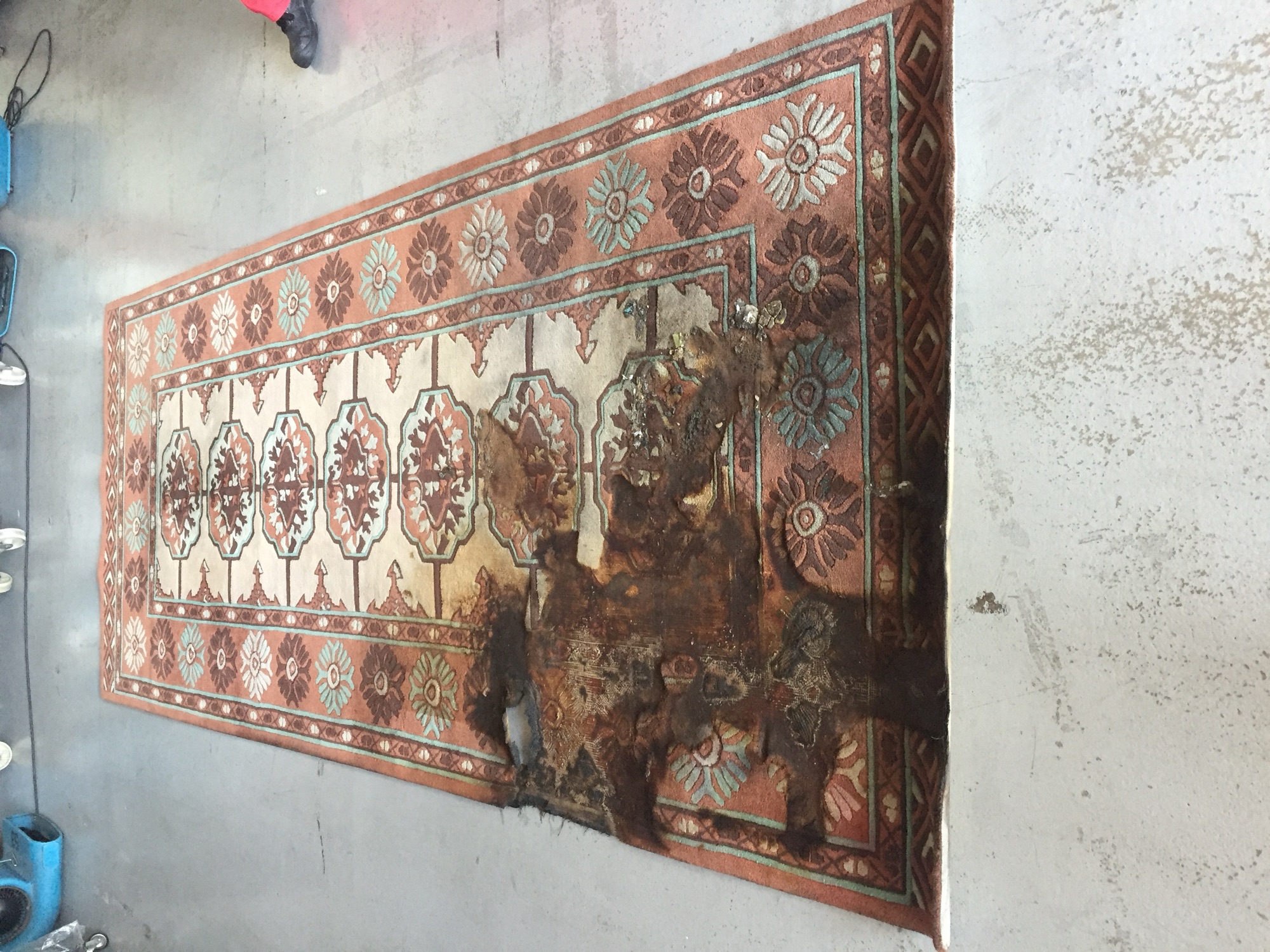
Why this matters: A rug cleaned with the wrong method, or by an untrained technician, can shrink, bleed colour or develop mould, and the damage is often irreversible.
Highlights
- Singapore's humidity accelerates soil and mould build-up deep in rug pile, making method and technician skill critical
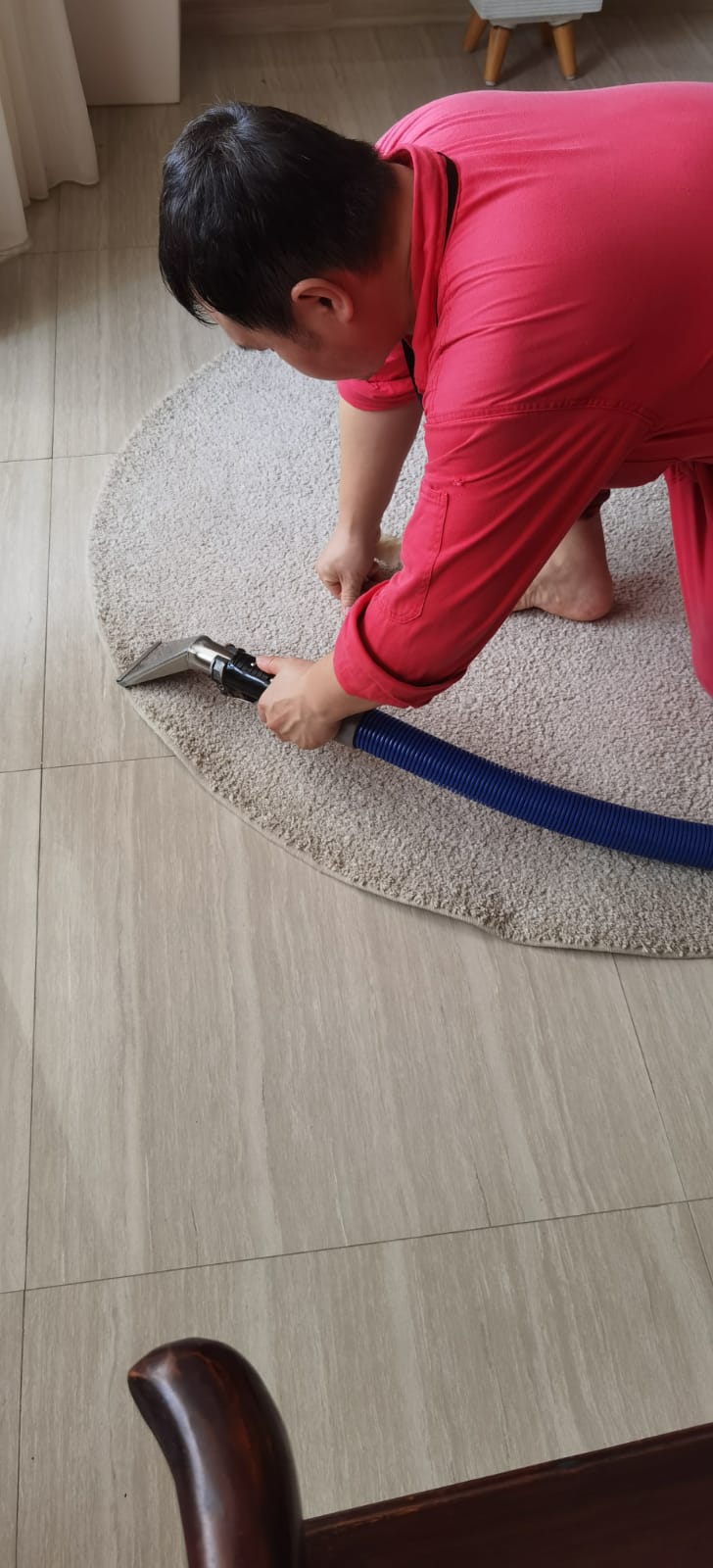
- Hot-water extraction removes roughly 96% of dust mites, soil and odour with no chemical residue
- Certification matters: look for IICRC- or CRI-certified technicians who are in-house, never sub-contracted
- Eco-friendly, pet- and child-safe solutions are the standard for responsible rug care
- Quick-dry and same-day service mean minimal disruption
What certification actually tells you
IICRC and CRI: the benchmarks worth checking
The two certifications that matter most in professional rug and carpet cleaning are the IICRC (Institute of Inspection, Cleaning and Restoration Certification) and the CRI (Carpet & Rug Institute). They are not marketing badges: they require technicians to pass structured training on fibre types, cleaning chemistry, moisture control and restoration methods.
Big Red was the first IICRC-certified carpet cleaning company in South East Asia. That is a verifiable fact, not a claim. When you ask a company about their certification, they should be able to name it and tell you which technicians hold it, not just gesture at a logo on their website.
In-house versus sub-contracted technicians
This distinction matters more than most clients realise. A company that sub-contracts work cannot guarantee that the person who arrives at your home has been trained to their stated standard. The certification on the website may belong to the business owner, not the person cleaning your rug.
Always ask directly: are your technicians employed in-house? At Big Red, every technician on every job is our own. We have never sub-contracted. That accountability is part of what the 30-year-plus relationship with clients like Changi Airport and Shangri-La Hotel is built on.
Method: why it matters for rugs specifically
Hot-water extraction versus surface cleaning
Rugs trap far more than surface dust. In Singapore's humidity, mould spores, dust mites and fine soil settle deep into the pile and backing, where a surface shampoo or bonnet clean cannot reach them. The comparison below shows why method choice has real consequences.
|
Method |
Penetrates the pile |
Residue left behind |
Drying time |
Best suited to |
|---|---|---|---|---|
|
Hot-water extraction |
Yes, deep into the fibre |
None |
4–6 hours |
Embedded soil, dust mites, odour, allergens |
|
Dry encapsulation |
Surface and mid-pile |
Minimal |
1–2 hours |
Maintenance cleans between deep cleans |
|
Bonnet / pad cleaning |
Surface only |
Sometimes sticky |
1–2 hours |
Light commercial refreshes |
|
DIY shampoo machine |
Surface only |
Often sticky residue |
8–24 hours |
Light soil on robust synthetic rugs |
For a wool, Persian or Oriental rug, hot-water extraction done by a trained technician is the most thorough method. The key qualification is "done by a trained technician": too much heat or moisture on the wrong fibre causes shrinkage and browning, which is why fibre identification before cleaning is non-negotiable.
You can read more about the comparison in our article on steam cleaning vs encapsulation for different carpet types.
Eco-friendly solutions and what that phrase should mean
Every provider says eco-friendly. What it should mean in practice: solutions that are pH-balanced for the specific fibre, biodegradable, and leave no sticky chemical residue that attracts re-soiling. Ask whether the cleaning agents are safe for pets and children, and whether the technician tests colourfastness before treating a coloured or dyed rug.
For delicate rugs, a colourfast test on a small hidden area is standard practice. If a company does not mention it, ask explicitly.
What a real guarantee looks like
Most companies offer some version of a satisfaction guarantee. The detail that separates a genuine one from a marketing line is what happens when you are not happy.
Big Red's 30-Day Delight guarantee means that if you are not delighted with the result within 30 days, we return and re-clean at no charge. It is a re-clean guarantee, not a refund-on-demand promise, and it applies to our standard services. It is stated plainly because that is what it is.
When evaluating any company's guarantee, ask:
- Does it cover re-cleaning or only a refund?
- What is the time window?
- Who decides whether the result meets the standard?
- Is it in writing?
A company that hedges every answer to these questions is telling you something.
DIY cleaning versus calling a professional
For a small, lightly soiled synthetic rug, a gentle hand-wash with a mild detergent and a long dry in the sun is often perfectly adequate. Singapore's outdoor heat can dry a flat rug in a few hours and the UV helps with bacteria.
Call a professional when:
- The rug is wool, silk, Persian, Oriental or antique
- There is a set-in stain, a persistent odour, or visible mould
- The rug has not been properly cleaned in more than a year
- Colours have started to bleed or the pile looks matted
- The rug is large and cannot be safely moved and dried at home
Over-wetting a rug at home is the most common DIY mistake. It leads to mould in the backing and wicking, where dissolved soil travels back to the surface as the rug dries, leaving a stain larger than the original. Our rug cleaning service uses controlled moisture and quick-dry equipment that avoids both.
If a stain has already set, honest advice is this: some stains, particularly bleach-type damage or old red wine, may improve significantly but cannot always be fully reversed. A good technician will tell you this before they start, not after. You can learn more about what is genuinely fixable in our guide to carpet stain removal.
Frequently asked questions
How do I know if a rug cleaner is properly certified?
Ask for the certification name (IICRC or CRI) and confirm which technicians hold it, not just the company. A certified business should be able to tell you without hesitation. Logos on a website without specifics are not enough.
Will hot-water extraction shrink my wool rug?
Not if the technician is properly trained in fibre identification and moisture control. Shrinkage happens when too much heat or water is applied to a wool or natural-fibre rug by someone who has not adjusted the method for the material. This is precisely why IICRC certification and in-house technicians matter.
How long will my rug take to dry after cleaning?
With hot-water extraction and proper equipment, most rugs are dry to the touch in 4 to 6 hours. Thicker pile or a humid day may extend this slightly. We advise keeping the area well-ventilated and avoiding foot traffic until the rug is fully dry.
Is rug cleaning safe for my children and pets?
Yes, when the company uses pH-balanced, biodegradable solutions. Our cleaning agents are formulated to be safe for children and pets once dry, and we leave no chemical residue on the fibre. If you have specific sensitivities in the household, let us know before we arrive.
What should I do to prepare before the technicians come?
Remove small items and fragile objects from the area. If the rug is on a parquet or marble floor, let us know: we will check the floor underneath before and after, and use protective equipment where needed. You do not need to vacuum first, though it helps if you have already removed loose surface debris.