
Your reception area makes a first impression before anyone speaks a word. The hand-knotted rug anchoring the space signals taste and investment. But after six months of foot traffic, trolley wheels and the occasional coffee spill, that same rug can look tired. If the wrong cleaning method is used to freshen it up, it may never fully recover.
This is the problem facilities managers and office managers in Singapore run into repeatedly. Wall-to-wall carpet and a decorative area rug look similar at a glance, but they are built differently, cleaned differently, and they fail in different ways. Treating them identically is one of the most common and expensive mistakes in commercial soft-furnishing care.
Why this matters: Getting rug cleaning wrong in a commercial setting does not just cost money. It can permanently damage a piece worth thousands of dollars and leave your lobby looking worse than before.
Highlights
- Decorative rugs in lobbies, boardrooms and breakout rooms accumulate damage differently from wall-to-wall carpet: castors, trolleys and point-load foot traffic are harder on hand-knotted pile.
- Wool, silk and hand-knotted rugs are highly sensitive to heat, agitation and alkaline cleaning agents. Methods safe on synthetic carpet can cause colour bleed, shrinkage or pile distortion.
- Off-site washing is often safer and more thorough than in-situ extraction for high-value or hand-knotted rugs.
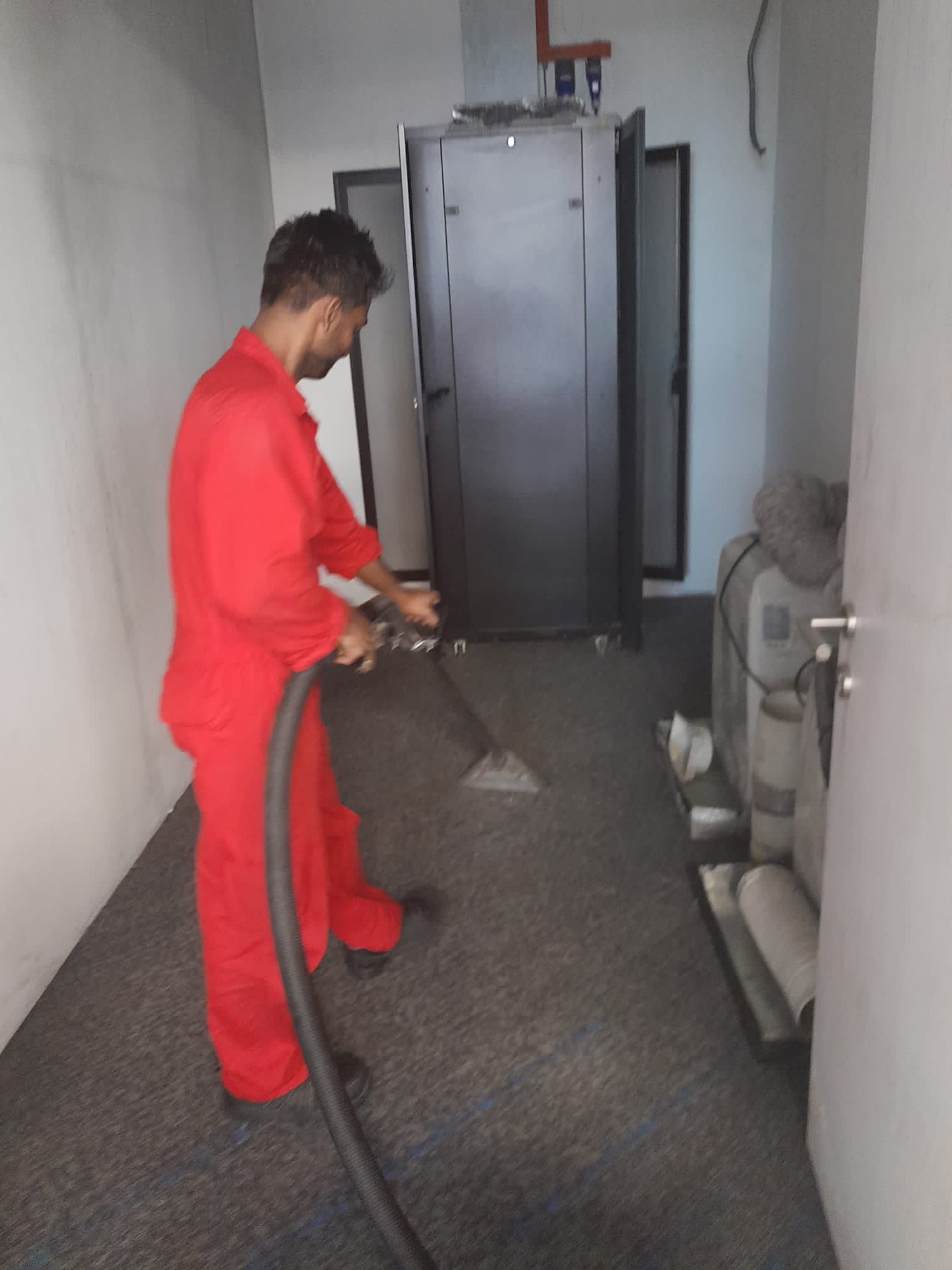
- Big Red's hot-water extraction removes roughly 96% of embedded soil, dust mites and odour, and our IICRC- and CRI-certified technicians assess each rug's construction before choosing a method.
- Same-day and 24/7 service means turnaround can be planned around your operations, not disrupted by them.
Why a lobby rug is not just a small carpet
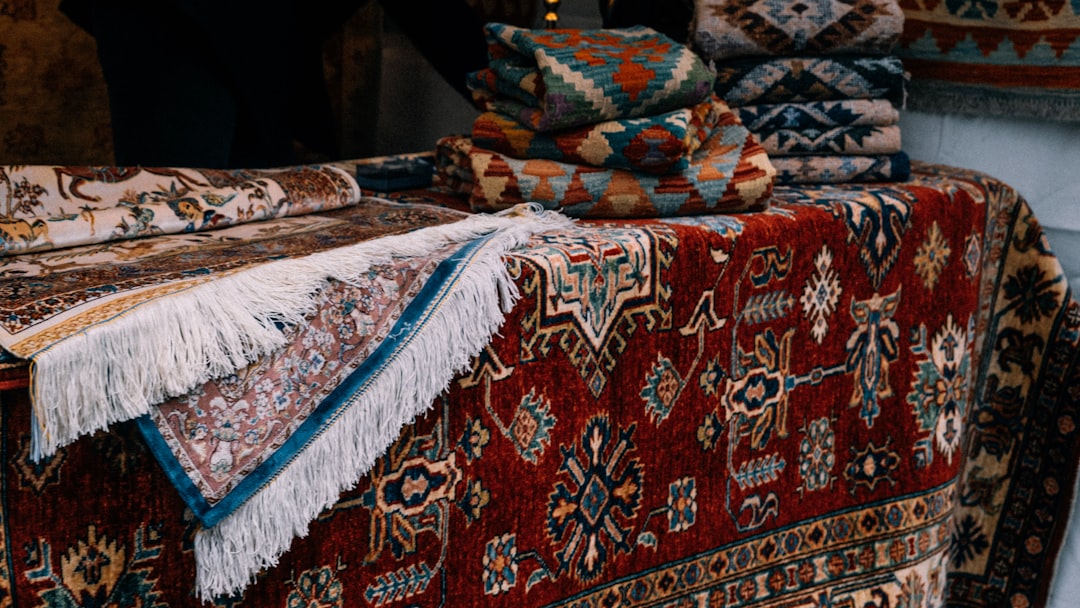
Wall-to-wall carpet is engineered for exactly the punishment it gets: synthetic fibre, a dense uniform pile, and a backing designed for in-situ hot-water extraction. It is a utilitarian surface. A decorative rug placed in the same office is often the opposite: natural fibre (wool, silk, or both), hand-knotted or hand-tufted construction, a dye process that may not have been tested for alkaline resistance, and a foundation that was never designed for machine extraction.
The differences matter in three specific ways.
Fibre sensitivity
Wool is the most common fibre in quality commercial rugs. It is naturally resilient and handles moderate foot traffic well, but it is sensitive to high-alkaline cleaning agents and excessive heat. Silk, which appears in high-end lobby rugs as accents or pile, is far more fragile: it loses tensile strength when wet and can distort permanently if scrubbed or extracted too aggressively. Even a jute or sisal backing, common on mid-range decorative rugs, can brown and stiffen if it absorbs too much water during cleaning.
The Carpet & Rug Institute advises cleaning imported Oriental, Turkish and Persian rugs according to the carpet manufacturer's recommendations, precisely because these constructions vary so much that a single universal method will inevitably damage some of them.
Colour-bleed risk
Hand-knotted and hand-tufted rugs, particularly those with vegetable or natural dyes, can bleed when wet. Alkaline cleaners accelerate this. In a synthetic wall-to-wall carpet with solution-dyed fibre, colour stability is rarely an issue. In a Persian or Tibetan-style lobby rug, applying the wrong pH solution can cause dye migration within minutes, and the result is irreversible. A colourfast test on a hidden corner before any wet treatment is non-negotiable.
Structural construction
A tufted carpet is essentially fibre pushed through a backing and glued in place with latex. It handles in-situ extraction well because the backing is stable. A hand-knotted rug has thousands of individual knots tied around a warp-and-weft foundation. The knots are stable, but the foundation can warp if unevenly wetted, and the pile can distort if pressure is applied in the wrong direction. Excessive agitation risks loosening knots near the edges, which accelerates fraying.
The case for off-site washing
For high-value, hand-knotted, or naturally dyed rugs, in-situ hot-water extraction is often not the best first choice. Off-site washing allows the rug to be fully immersed, agitated gently in a controlled environment, rinsed thoroughly to remove all detergent residue, and dried flat or hung to prevent warping. It also gives a technician the time to inspect the rug's condition properly: checking for pre-existing moth damage, pile wear, fraying edges, and colour instability before any moisture touches the surface.
In-situ extraction works well for synthetic-blend area rugs and for wool rugs in good structural condition where a full wash is impractical. The key is that the decision should be made by someone who has assessed the specific rug, not by default.
Turnaround and your operations
Off-site cleaning for a large lobby rug typically means the rug is away for one to two days. That is a real operational consideration: the lobby floor is exposed, furniture needs to be moved, and the space looks different while the rug is gone. Planning the clean during a public holiday, over a weekend, or during a scheduled office closure removes most of the disruption.
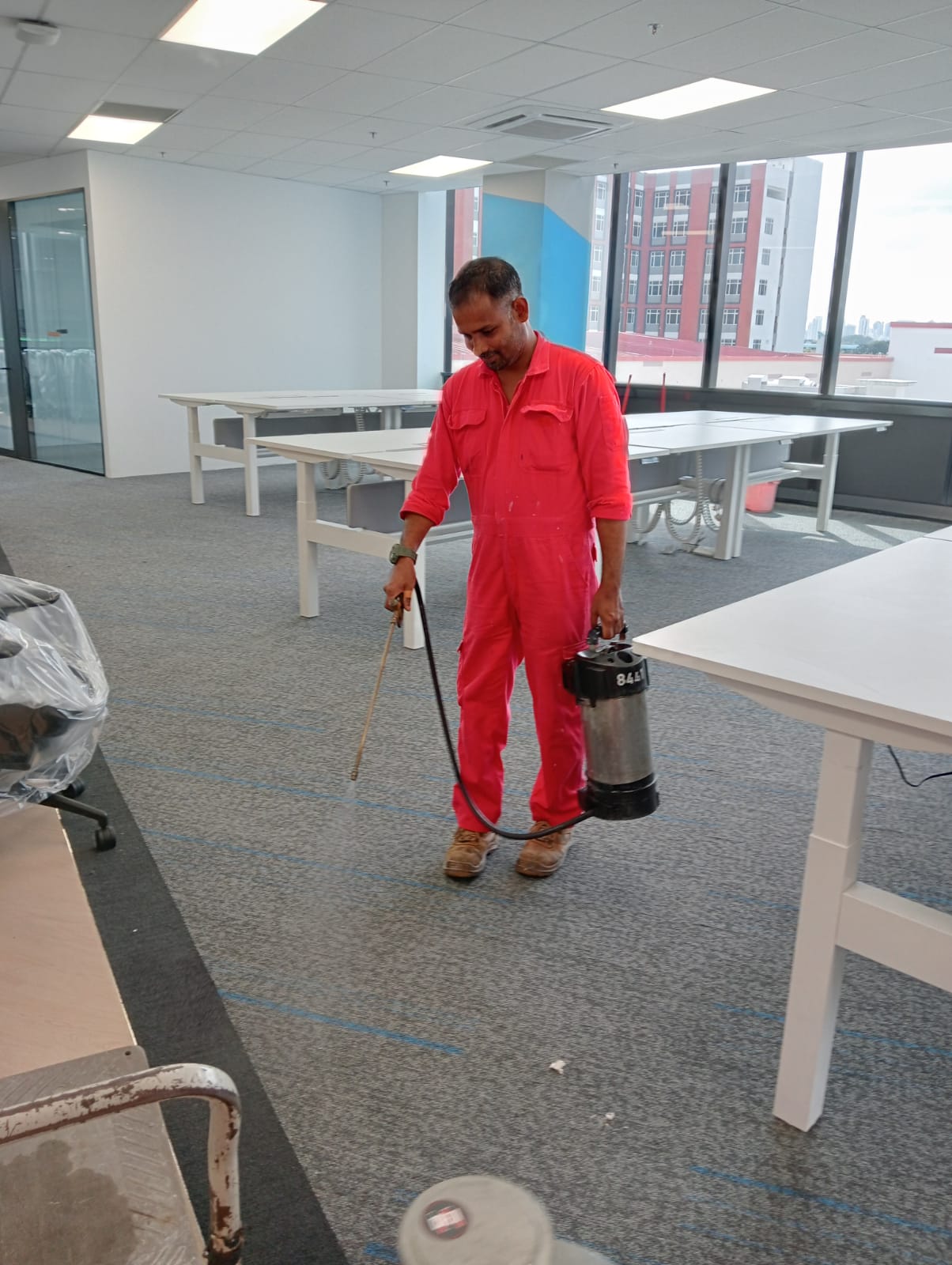
For rugs that can be cleaned in-situ, our hot-water extraction process leaves the pile quick-dry, typically dry to the touch within a few hours. That means a lobby clean can be done before staff arrive in the morning and the area is ready for the working day.
This is one area where working with a cleaning partner who offers same-day and 24/7 service makes a practical difference. It gives facilities managers scheduling flexibility that a Monday-to-Friday-only provider cannot.
How office rugs accumulate damage differently
Foot traffic alone is not the main enemy of a lobby rug. The real threats are more specific.
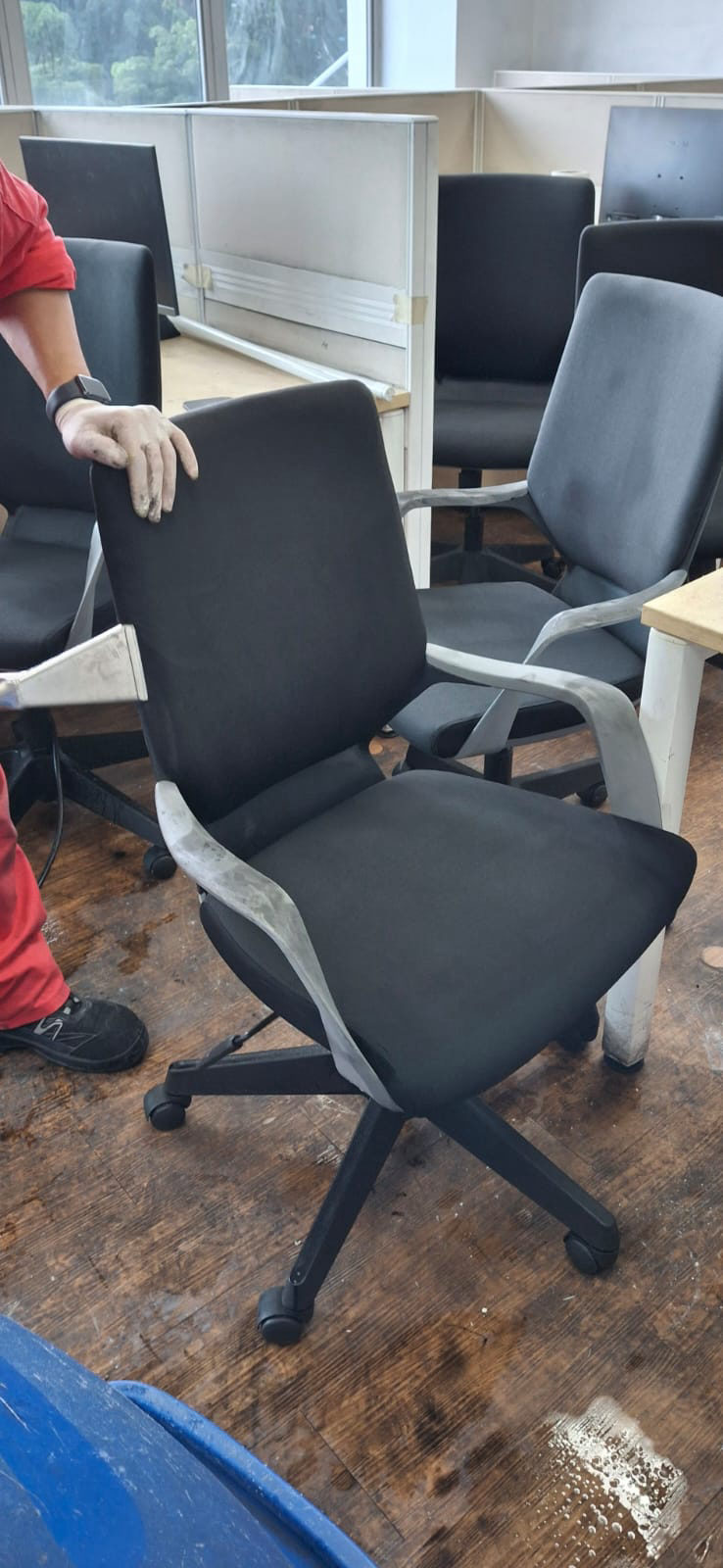
- Chair castors: in boardrooms and breakout areas, castor-equipped chairs roll back and forth over the same rug zone repeatedly. This crushes pile in a concentrated strip rather than distributing wear evenly, and it accelerates fibre breakdown at the base of the pile.
- Trolley and equipment wheels: delivery trolleys, AV equipment and catering carts cross lobby rugs with point loads far higher than foot traffic. A single pass from a loaded trolley can compress and distort pile permanently.
- Spills that are blotted, not treated: most office cleaning staff are trained to blot a spill and move on, which is correct as far as it goes. But if the spill reaches the foundation of the rug and is not fully extracted, it dries into the backing and causes browning or odour that surface cleaning will not touch.
- Dry soil loading: Singapore's outdoor air is relatively particulate-free compared to temperate cities, but tracked-in soil from construction sites, food courts in the same building, and wet-season mud still works into pile. Dry soil is abrasive and cuts fibre from the inside when the rug is walked on.
Regular vacuuming helps with dry soil but does not address compressed pile, embedded soil below the pile surface, or anything that has reached the backing. For a comprehensive look at how foot traffic and Singapore's climate affect rug condition specifically, the rug cleaning in Singapore guide covering humidity and foot traffic sets out the detail.
When DIY is fine and when to call a professional
For a fresh, contained spill on a synthetic or wool-blend rug, blotting immediately and allowing it to air dry is the right first response. Do not rub: rubbing drives the spill deeper into the pile and spreads it laterally. For most common office spills (water, tea, coffee) quick blotting and a light rinse with plain water is enough to prevent a permanent stain.
Professional cleaning becomes necessary when:
- The rug has not had a deep clean in more than six to twelve months and soil is visibly embedded in the pile.
- There is browning, which indicates soil or moisture has reached the backing.
- There is a persistent odour that vacuuming does not clear.
- The rug is hand-knotted, naturally dyed, or made with silk pile. These should never be cleaned with alkaline agents or aggressive extraction by someone unfamiliar with their construction.
- There are signs of moth damage, fraying at the edges, or pile distortion that need assessment before any wet treatment.
For facilities managers responsible for multiple sites or high-value rugs, the guide to choosing a rug cleaning service in Singapore is worth reading before you appoint a provider. It covers the questions that separate a careful specialist from a carpet cleaning company that happens to take rugs.
Our technicians are certified by both the IICRC and the CRI, they work in-house (we never sub-contract), and they assess each rug individually before selecting a method. For hand-knotted pieces or naturally dyed rugs, that assessment step is not optional. It is what protects your investment. You can also see how we approach high-value rug repair and restoration in Singapore when a rug needs more than a clean.
For commercial environments dealing with wall-to-wall carpet alongside area rugs, the piece on carpet and rug cleaning schedules for FM contracts covers how to structure a maintenance programme that treats both surfaces correctly.
Frequently asked questions
Can the same cleaning method be used on a lobby rug and on wall-to-wall office carpet?
Usually not, no. Wall-to-wall commercial carpet is almost always synthetic and designed for in-situ hot-water extraction. A decorative lobby rug may be wool, silk or hand-knotted with natural dyes, all of which require a lower-alkalinity solution, less agitation and sometimes off-site washing. Using an aggressive extraction method on the wrong rug causes shrinkage, colour bleed or pile distortion. This damage is often irreversible.
How often should an office lobby rug be professionally cleaned?
For a typical Singapore office lobby with moderate foot traffic, a professional deep clean every three to six months is reasonable. High-traffic environments or rugs near entrances exposed to wet-season mud and outdoor particulates may need cleaning every two to three months. In between, daily vacuuming and prompt blotting of spills extends the interval considerably.
Will hot-water extraction shrink or warp a wool rug?
Not if it is done correctly by a trained technician. The risk of shrinkage or warping comes from over-wetting, excessive heat, or drying a rug unevenly under tension. Our IICRC-certified technicians adjust water temperature, pressure and dwell time to the specific fibre and construction before starting, and natural-fibre rugs are dried flat or in a controlled way to prevent distortion.
Is it practical to clean a large lobby rug without removing it?
For many synthetic-blend and wool-blend rugs in good structural condition, in-situ cleaning is practical and effective. For hand-knotted rugs, naturally dyed pieces, or rugs showing signs of colour instability, off-site washing is safer. The deciding factor is the rug's construction and condition, assessed before any cleaning begins. A quick turnaround (cleaned overnight, dry by morning) is possible with in-situ extraction when scheduling allows.
What should a facilities manager tell the cleaning team to do immediately after a spill on a lobby rug?
Blot the spill with a clean, dry cloth, working from the edge inward to avoid spreading it. Do not rub. Do not apply cleaning product unless you know the rug's dye stability. Blot until no more liquid transfers to the cloth, then allow the area to air dry. If the spill was oily, coloured, or large, flag it for professional treatment rather than attempting a full spot clean with an unknown product.
A lobby rug is an asset, and like any asset it needs appropriate maintenance. Not just whatever process is quickest or closest to what works on the carpet beside it.
Ready to protect your lobby rug? Contact Big Red Carpet Cleaners for a free assessment and quote. Call us on 6241 9443, WhatsApp 9222 9222, or email info@bigred.com.sg. You can also request a free quote online.